



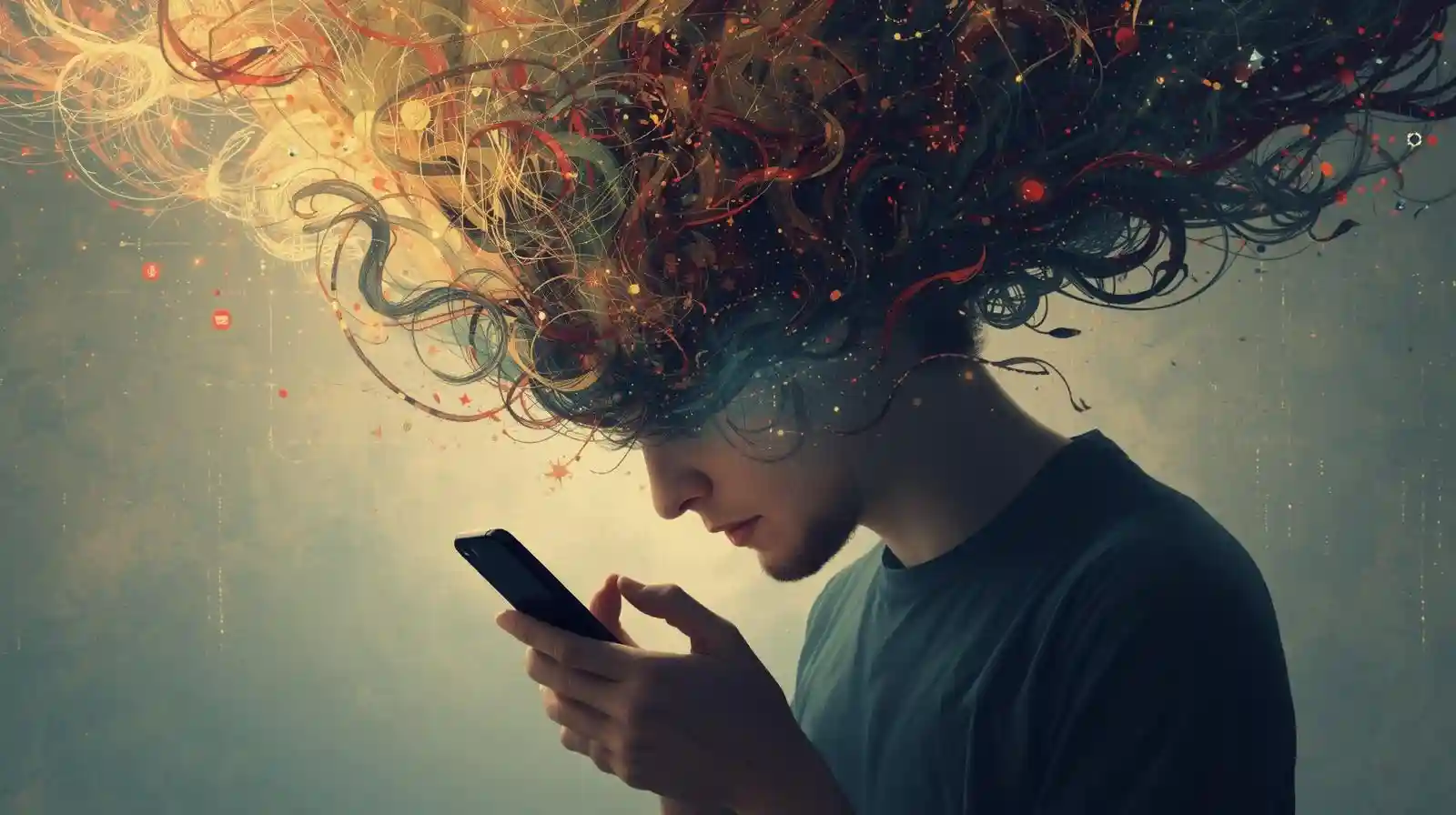
Social media is just like the morning coffee or late-night snacks that people have in their daily routines, and it has quietly slipped into their routines. Very often a few minutes of scrolling turns into half an hour without quite realizing it. It is the way people keep in touch with friends, find out trends, get the news, and sometimes just shut off after a tiring day. There is nothing wrong with that in principle. As a matter of fact, social media can be quite comforting, familiar, and strangely soothing. However, amidst all this connection, there is an increasing conversation about mental health and it is for a good reason. The digital world, according to the article, is like an amplifier that magnifies the emotions that we have, the good ones as well as the not so good ones.
The Highs of Feeling Connected
Universal Link Media has found that social media helps to build the feeling of belongingness. A user tweets that he had a bad day and immediately supportive comments start to come. A niche interest that once was lonely now has an entire community. These platforms represent the oxygen to the lungs for people who are isolated in their offline lives. Such a connection is the most valuable thing. The feeling of being seen and heard, even if it is through a screen, can definitely elevate one’s spirit and self-worth.
One can find a huge source of inspiration everywhere, too. Fitness journeys, creative projects, personal growth stories. The fact that the others are pursuing their goals can motivate one and can make one’s big dreams seem a little more attainable.
The Comparison Trap That Sneaks Up
Then there is the other side, the one that sneaks up quietly. Endless highlight reels have a way of messing with perspective. Perfect vacations, flawless selfies, career wins stacked back to back. It is easy to forget that most posts are carefully chosen moments, not full lives. Still, the brain does not always make that distinction. Comparison creeps in. Why does everyone else seem happier, fitter, more successful? That kind of thinking can chip away at confidence over time. Even people who know better can fall into this trap on a tired Tuesday night.
Likes, Validation and the Brain
Those little hearts and thumbs ups are more powerful than they look. Each notification delivers a small rush of dopamine, the feel good chemical. The brain starts to crave it. Post something, wait, check, refresh. When the response is good, mood lifts. When it is quiet, doubt can settle in. This cycle can make self worth feel tied to online feedback, which is a shaky foundation at best. Over time, the need for validation can create anxiety, especially among younger users who are still figuring out who they are.
The Pressure to Always Be On
There is a peculiar pressure to always be seen. Not being around for a little while can give you the feeling of being left behind. Trends change quickly, jokes have a short lifespan, and the feeling of missing out is very real. Being in this constant state of alert can result in mental exhaustion. The brain does not get its full rest as it is always partly waiting for the next notification. Sleep is also affected. People keep scrolling late at night most of the time and hence sleep time goes later and later, and bad sleep is directly linked to mood, focus, and stress levels. Everything is connected, like a tangled mess of wires.
Social Media and Anxiety
Anxiety can easily be intensified by the internet. The news goes viral very quickly, most of the time it is still without context. In fact, the combination of alarming headlines, heated debates, and incessant updates can give a sense to the world that it is much more disordered than it really is. If you take the dread of saying something incorrectly or being judged into account, it is still not a surprise that the rate of stress increases. Posting for some people becomes a source of worry rather than a way of fun. Is this going to be understood wrongly? Is it going to be ignored? That anxiety can turn a simple thing into a hard mental task which should have been just a casual activity.
Depression and the Quiet Scroll
Depression and social media are a pair of opposites with a complicated relationship. In a way, going through the feed can be like having a friend with you in your lonely moments. Yet, merely glancing at the content might make the emptiness that you feel even more intense. The fact that others appear to be living their best lives while you feel stuck can make you suffer greatly. Social media’s technology is set up in such a way that it presents to users what they would most like to see, and those could be videos and posts overflowing with emotions and, sometimes, even dramatics. If a person is mentally troubled already, it can make his/her negative thoughts even stronger. What started as a quiet scroll turns into a spiral the person finds it difficult to get out.
Not All Doom and Gloom
One thing that needs to be emphasized is that social media is not the bad guy. It is a means, and similarly to any means, its influence is determined by the way it is operated. A lot of people have discovered therapy resources, mental health awareness campaigns, and supportive communities through the internet. The discussions around anxiety, burnout, and self-care have become more transparent than ever, to some extent due to these platforms. The reduction of stigma that comes with it, thus, more people getting help. That is a genuine victory.
Finding a Healthier Balance
The key lies in balance, even if balance looks different for everyone. Saving your feeds does wonders. Choosing to follow only those accounts which inspire you instead of draining you can totally change the vibe. Having breaks, even very short ones, allows the brain to have its own space. Getting rid of all the unnecessary notifications that bother you all the time is another way to help yourself. There are people who decide on screen time limits while some put their phones out of the bedroom. Not a single one of these things has to be perfect. Little changes slowly make a big difference.
Learning to Scroll With Intention
Mindful scrolling is a term that is becoming more and more popular. In essence, it is all about recognizing the impact that the content has on one’s emotions. Happy, satisfied, and like a part of something. Or tired, stressed, and somewhat inexplicably sad. That recognition helps one to disengage more easily when the time is right.
Social media is a tool that is meant to facilitate life, not to take it over entirely. Employing it in a purposeful way makes it from a non-thinking habit to a decision, and just this change can have a positive effect on one’s psychological health.
A Conversation Still Unfolding
The link between social media and mental health is a work in progress. Networks are changing, attributes are coming and going, and users are adjusting. What remains unchanged is the basic human need for connection, approval, and peace. Social media satisfies all these needs, sometimes perfectly, sometimes awkwardly. Communicating openly about the effect of the internet helps each individual to find his way a little better. It’s not about giving up completely or acting as if the virtual world is unimportant. It is about recognizing its impact and allowing room for mental health in a highly connected era.