



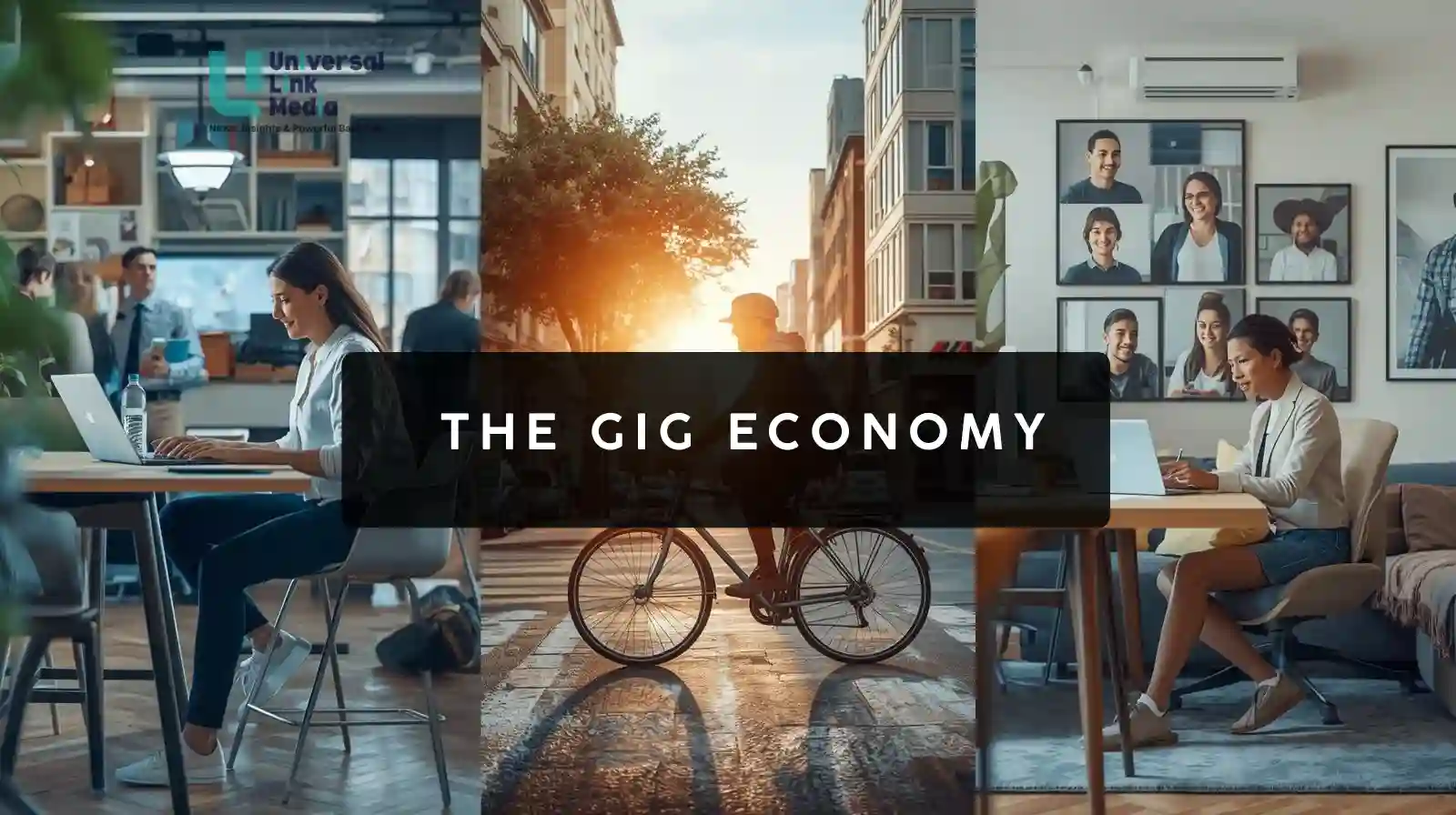
Wander down roads in town or check delivery apps, and the gig world pops up quickly. A shared car arrives, a runner cuts across roads holding food, a logo arrives from a designer in a cafe. Jobs no longer sit still inside the nine to five frame, this switch seems fun and a bit odd. The gig world is not just side jobs or easy money. It is changing how firms grow and how folks see jobs, safety, and choice. There is buzz here, plus some unsureness, that mix makes the story.
From Punching In to Clicking On
Old jobs meant set times, a place, and pay that landed on time. The gig world turns it over. Jobs start when asked and when workers want to show up also. Sites link skills to jobs fast, be it cars, code, videos, or putting things together. For firms, this feels quick. Instead of hiring folks full time for each job, firms use skills when needed. It feels like ordering food, not making a meal each night.
This switch did not just happen. Tech made it real, and life shifts pushed it forth. Folks want ease. Firms want speed. The gig world found land in the middle and grew up fast.
New Start ups Shapes Taking Place
In a survey conducted by Universal Link Media, Start ups built on gig jobs seem new from old style ones. Most act like guides, not bosses. They build sites, set rules, handle pay, and grow trust with ratings. Jobs happen out in the world, far from the main office. This cuts costs and allows quick growth. Add users, add workers, then a small group looks huge.
But it is not all calm seas. These firms must mix speed with care. Codes pick who gets jobs and who waits. Prices change based on need, at times in ways that feel strange. If things mess up, like late drops or sad buyers, blame blurs. Gig firms learn fast that trust is real cash. Without it, the plan shakes.
The Worker Part of the Story
For workers, gig jobs can feel free with a catch. Setting your own time sounds cool, for students, helpers, or those tired of set times. There is choice in picking jobs too. On good days, it feels strong. On bad days, it feels like chasing buzzes and hoping numbers add up.
Pay can dip, and help is not with the job. Health care, time off, and savings become hard tasks, not given perks. This sparks talk about types and care. Some folks grow in ease. Others feel exposed. Both experiences are real, and any honest conversation about the gig economy has to hold space for that complexity.
Managing a Workforce That Is Everywhere
From a management perspective, leading a gig workforce is a different game. There is no shared office culture or water cooler chat. Communication happens through apps, emails, and automated messages. Feedback is instant and public, thanks to rating systems. That can motivate quality, but it can also create pressure and stress.
Smart businesses invest in clear guidelines and transparent processes. They offer support even if workers are technically independent. Training videos, help centers, and responsive customer service go a long way. When workers feel respected and informed, performance improves. It sounds simple, but in a fast moving platform environment, those human touches matter more than ever.
Rules often trail behind what is new, like the gig world stuck in that space. Countries deal with questions about what workers deserve, taxes, and who is to blame. Is a driver a lone wolf or more like a staff member. Should apps chip in for community support? Views differ a lot, and rules are not the same everywhere.
For firms, not knowing feels like walking on soft ground. Following rules takes time and funds, yet dodging them is not safe. Smart firms talk to rule makers and change plans early. It is not a fun task, but it matters for lasting success.
The Real People Behind the Touchscreens
Talking about apps is simple yet we forget the humans in it. Every gig has a person handling tasks, cutoffs, and life stuff. A solo worker may reply to job emails while helping a child study. A delivery person may fight weather to meet a promise. These bits add color to the gig story.
Firms that see this human side tend to shine. Tiny things like fair fights or clear pay info make friends. Buyers notice it too. Knowing that ease has a price is rising, and many back apps that treat staff well.
Seeing Forward Without Magic Glasses
The gig world keeps changing. New tools such as robots may remake jobs and needs. Some gigs may fade as others pop up. Mixed plans are here, mixing freedom with calm. Think part time deals with gains or shared owned apps.
What looks sure is that the past idea of work as one long job is going. Instead, we see bits of jobs, roles, and money ways. That feels wild, but it frees room for new ideas. Firms that stay keen and bendable can handle what comes.
Conclusion
The gig economy is not a trend that will quietly fade. It reflects deeper changes in how society values time, autonomy, and connection. Navigating this landscape requires honesty about the trade offs and a willingness to experiment. For businesses, the challenge lies in building models that are efficient yet humane. For workers, it is about finding balance and advocating for fair treatment.
There is no single right way to do gig work, and that unpredictability is part of its charm and its challenge. Like any major shift, it brings friction along with opportunity. Paying attention to both sides of that equation makes the journey a little more grounded and a lot more interesting.