





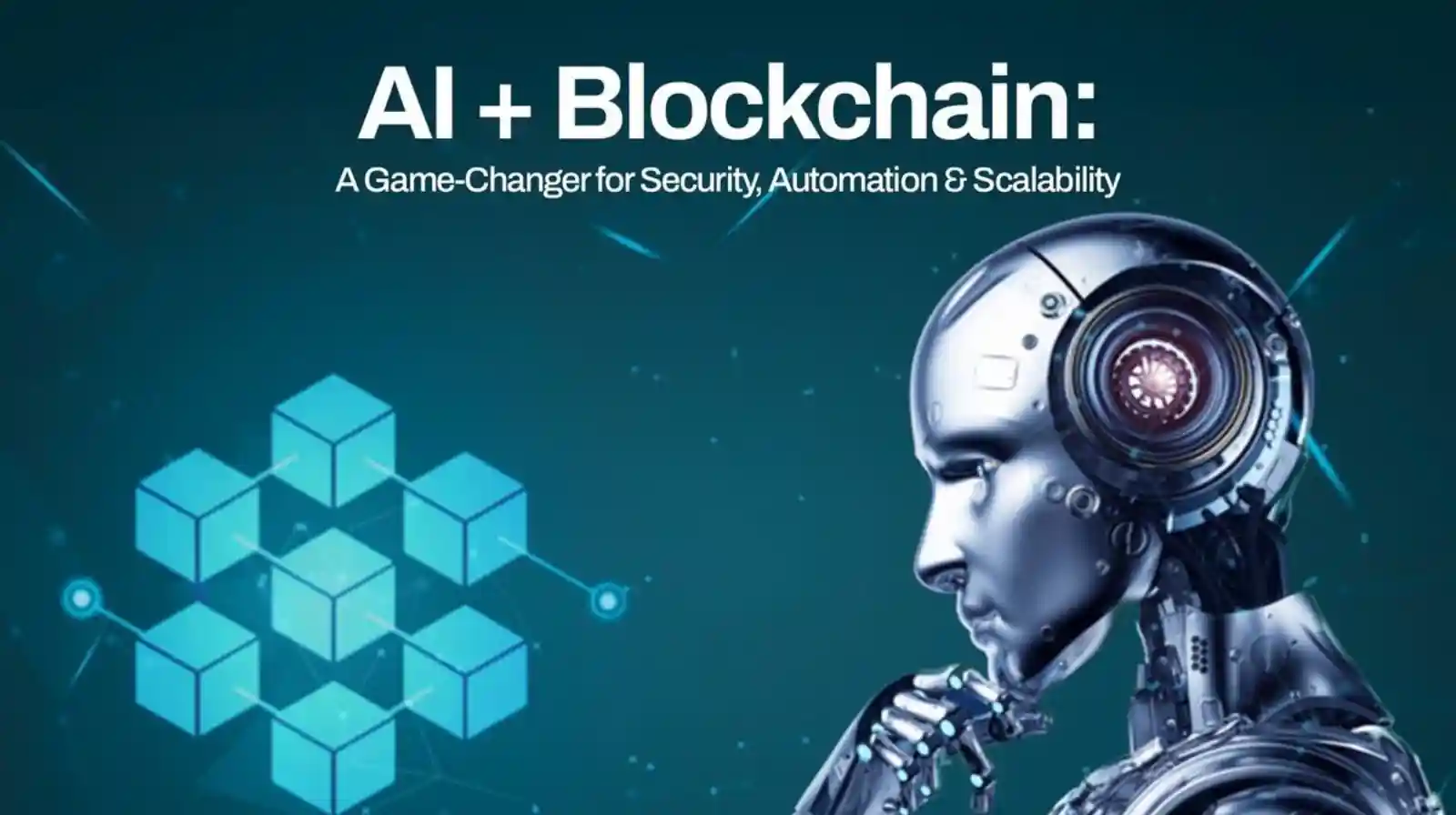
Technology often has a strange way of its different innovations coming together exactly at the right moment. Blockchain used to be just that enigmatic ledger that was powering cryptocurrencies and nothing else. Artificial intelligence seemed to be like an extremely talented genius that was quickly analyzing data and making some predictions which looked almost like magic. The two of them now are not just two distant stars. They are meeting, collaborating and silently changing the way digital systems think, decide and trust. The coming together of blockchain and AI is not a flashy futuristic dream. It is a realignment that is happening in finance, healthcare, supply chains, and even in the apps that we use every day. Something significant is usually indicated by the presence of excitement and a bit of confusion at the same time.
Understanding the both technology
Universal link media gives the understanding that blockchain is a way of ensuring trust without having a middleman. It keeps a record of transactions in a distributed ledger that is visible to everyone and not very easy to modify. If the data is stored, it is still there, like ink that does not change.
Artificial intelligence, on the other hand, depends on data. It recognizes patterns, makes better decisions, and is capable of doing those tasks which require human judgment, without human intervention. Each of them, as separate technologies, is limited in some way. Blockchain is not very good at speeding up processes and being flexible. AI, on the other hand, faces problems with transparency and bias. Interesting is the fact that when these two technologies are combined, the result is not just a sum of two but something new. With blockchain, AI gets data that is free of any kind of contamination, is verified and even has a clear audit trail. Artificial intelligence can make a blockchain system more efficient, quicker, and more flexible. It is somewhat similar to the combination of a very thorough and detail-oriented accountant and a brilliant analyst. Without any previous preparation the figures suddenly are capable of telling a story which can be trusted.
Why Does This Convergence Matters Right Now?
Timing is everything. Data is proliferating everywhere, and trust in digital systems is deteriorating. People have become skeptical due to the presence of fake content, manipulated data, and algorithms that are not transparent. Companies desire the automation of processes but at the same time, they want to be able to account for it. Governments desire innovation but at the same time, they want to be in control. This is the point where the combination of blockchain and AI technology is no longer perceived as a trend but rather as a necessity. Blockchain is capable of recording the source of data, the changes to it, and the people who have access to it. AI, on the other hand, can process that data instantly and convert it into a response. Thus, they are able to satisfy the increasing demand for the systems that are both intelligent and trustworthy. It is not about substituting humans. It is about building systems that make fewer questionable decisions behind closed doors.
Real World Applications Already Taking Shape
In finance, the convergence is already changing how fraud is detected and prevented. AI models scan transaction patterns for anomalies, while blockchain ensures the transaction history cannot be quietly altered. When something suspicious appears, there is a clear trail to follow. Healthcare is just one of the many areas that are full of promising innovations. Patient records that are kept on the blockchain can be safe and confidential, at the same time, AI can analyze the combined data to detect health trends or suggest treatments. In a more realistic way, supply chains are the case that is less far-fetched. Items can be followed from their source to the retail store on a blockchain ledger, whereas AI can forecast delays, route optimizations, or issue alerts related to product quality. Though it may sound like a sophisticated process, the result is straightforward. Fewer surprises and more confidence in the system.
Decentralized Intelligence A New Way of Thinking
Decentralized AI is perhaps the most fascinating concept resulting from this convergence. Usually, AI systems of a traditional nature depend on central data pools that are under the control of one entity. This situation might lead to an unbalanced distribution of power and privacy risks. With blockchain technology, there is no need for a central place where all the data is pulled because an AI model can learn from the data that is distributed over several nodes. Those who have the data keep the control, the permissions are clear, and there can be the provision of incentives through smart contracts or tokens. In a way, it is like the intelligence of the crowd, only that it is more organized and there are mechanisms for accountability. The potential impact of such a switch on the areas in which AI is used and the consequent effect of AI on personal data or public infrastructure is enormous.
Challenges That Keep Things Interesting
Certainly, this is not a flawless fairy tale. There are genuine problems, and it would be a mistake to pretend otherwise. One of the biggest issues is scalability. On the one hand, blockchain networks can be slow and energy intensive, while on the other hand, AI often requires a lot of computational power. Combining the two thus involves not only careful designing but also making some trade-offs that may not be very comfortable. Besides that, there is also the problem of a lack of required skills. Few experts who have a deep understanding of both technologies are still. Moreover, regulation is yet another factor that complicates the situation. Rules are struggling to keep up with innovation, and the combination of AI decision making and immutable ledgers is raising very difficult questions about accountability. These obstacles might be irritating, but they also indicate that the area is not dead and is still developing.
The Human Element Still Matters
Despite all the talk of automation and algorithms, humans remain central to this story. Technology reflects the values and choices of those who build and use it. Blockchain can lock in transparency, but it cannot decide what should be transparent. AI can optimize outcomes, but it cannot define what fairness means. The convergence of these tools offers an opportunity to design systems that respect privacy, reward collaboration, and reduce blind trust. It also demands responsibility. Poorly designed systems can amplify bias or create rigid structures that are hard to fix. The future will favor teams and organizations that blend technical skill with ethical awareness and a bit of humility.
Looking Ahead The Shape of the Future
Peering into the future of blockchain and AI feels a little like watching the weather. Patterns are visible, but surprises are guaranteed. More autonomous systems are likely, negotiating and executing decisions with minimal human input. Digital identities may become more secure and portable. Data marketplaces could emerge where individuals choose how their data trains AI models and get rewarded for it. None of this will happen overnight. Progress will come in bursts, pauses, and occasional missteps. That uneven rhythm is part of what makes technological change feel human, even when machines are doing the heavy lifting.
Conclusion A Convergence Worth Watching
The alignment of blockchain and AI is not simply about hype or buzzwords. It is more about creating digital systems that are intelligent, equitable, and more transparent by using these technologies. Individually, each technology is limited in some areas, but together they create a partnership which seems not only logical but also somewhat exciting. There will be obstacles, discussions, and perhaps even a few too many promises made to be burst, but the way forward is still very evident. As a matter of fact, these two technologies being so tightly interwoven, they will probably have a huge impact on the very concepts of trust and intelligence in the digital age. That tomorrow is neither far away nor difficult to comprehend. It is already knocking, slightly awkwardly perhaps, but with a lot of potential in its hands.