





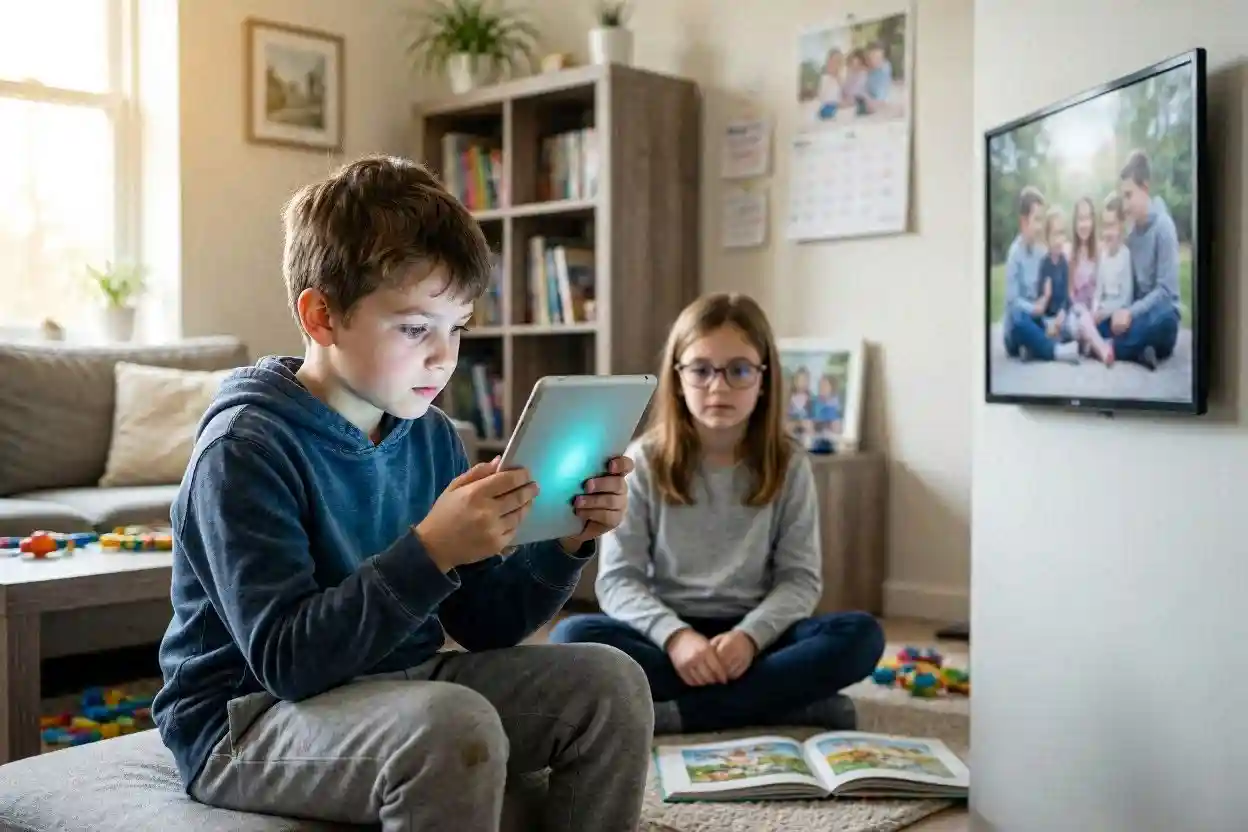
Nowadays, children are very much exposed to screens throughout their day. Phones, tablets, computers, TVs & educational devices have become so common in our homes and schools. Thanks to these, life has become easier in many ways. But, it has also brought eye health in the spotlights. Myopia is one of the worries that get bigger day by day. Most families know the word but are not always sure what it is. Myopia is a condition of the eyes where the distant objects appear blurry, but the near ones remain clear. So, a child may be able to read a book without a problem but have difficulties in reading the text on a distant road sign. This issue is spreading globally. Experts often point out that the bigger indoor time and more screen usage are modern habits contributing to this rise. At first, one may find the story very intimidating. Still, in the end, the aim is not to be scared of technology but to comprehend how our everyday behaviors impact young eyes and to come up with easy methods to safeguard the eyesight even when life is still going on in a balanced and reasonable manner. Let’s figure out about Myopia, Cause and prevention in this blog by Universal Link Media.
What Is Myopia?
Myopia is often called short sightedness. Children with myopia are able to see things that are near to them clearly but have difficulty in recognizing far away objects. That is because the eye’s growth alters the focusing of light inside it. Rather than focusing exactly on the retina, the light rays focus in front of it. So, distant pictures seem indistinct. Some kids get slight myopia whereas others get quite significant changes with time. The problem might be triggered even from the early years of schooling and can continue through childhood and adolescence. A kid might not necessarily be aware that vision is changing. Sometimes they may simply get used to blurred vision. Regular eye tests help to detect myopia at the earliest time and this can make a great impact. Good sight enables one’s learning confidence , sports engagement, and many things that take a child out into the world and help them grow.
Why Does Screen Time Get Attention?
Screen time often becomes part of the conversation because children now spend many hours focusing on nearby objects. Whether reading messages, watching videos, attending classes or playing games, the eyes stay locked on close distances for long periods. This kind of visual behavior is known as near work. Near work itself is not automatically harmful. Reading books also involves looking at something close. The concern appears when close focus continues for long stretches without breaks and replaces time spent outdoors. Modern routines sometimes create exactly that situation. A child may move from online lessons to games and then to videos before bedtime. The eyes rarely get a chance to shift attention toward distant objects. It is a bit ironic. Technology can connect a child to the whole world while the eyes spend hours looking only a few inches away. That contrast helps explain why experts keep studying the relationship between screens and myopia.
How Screens May Affect Growing Eyes?
Researchers continue exploring the exact connection between screen use and myopia. The relationship is complex and involves several factors. One important factor is prolonged near work. When children spend long periods focusing up close the visual system works differently than it does during outdoor activities. Another factor is reduced exposure to natural daylight. Outdoor light appears to play a protective role in healthy eye development. Children who spend less time outside may miss that benefit. Screen use can also encourage habits such as sitting very close to devices or remaining indoors for extended periods. These patterns may contribute to vision changes over time. Not every child who uses screens will develop myopia. Likewise not every case of myopia comes from screen related habits. Genetics also matter. Still many experts agree that heavy screen use combined with limited outdoor activity creates conditions that may increase risk. That is why balanced routines receive so much attention.
Warning Signs Parents Should Notice
Children do not always complain about blurry vision. Sometimes the signs are subtle and easy to miss. A child may squint while looking at a classroom board. Another child may move closer to the television even when plenty of space is available. Frequent eye rubbing can also appear. Some children experience headaches after visual tasks. Others seem less interested in activities that require distance vision. Teachers occasionally notice changes before anyone else because children struggle to see information presented across the room. Holding a phone or tablet unusually close can be another clue. A few children become frustrated without understanding why. Imagine trying to recognize a friend from across a playground while everything looks fuzzy. That can feel confusing. Paying attention to these small signals can help families seek professional advice early. Early action often makes management easier & helps children stay comfortable in school and daily life.
The Risks Of Untreated Myopia
Myopia is more than a need for glasses. When it progresses significantly it can increase the chance of other eye problems later in life. Higher levels of myopia are linked with greater risks involving important structures inside the eye. This does not mean every child with myopia will face serious complications. However it does explain why eye specialists encourage monitoring and management. Beyond long term concerns, untreated myopia can affect everyday experiences. School performance may suffer if a child cannot clearly see lessons. Sports and outdoor play can become more challenging. Confidence may also take a hit. A child who struggles to see what friends see can feel left out or frustrated. Vision shapes how children learn, explore and interact with the world. Protecting eye health is not simply about seeing letters on a chart. It is about supporting development, comfort participation and overall quality of life.
The Role Of Outdoor Time
Outdoor activity is one of the most encouraging parts of the discussion because it offers a simple and enjoyable habit. Studies have suggested that spending more time outdoors may help reduce the risk of developing myopia. Natural light appears to support healthy eye growth. Outdoor environments also encourage children to focus on objects at different distances. Trees, clouds , buildings , birds and moving people create constant visual variety. That is very different from staring at one nearby screen for hours. The best part is that outdoor time does not need to be complicated. A walk in the park, a game of catch, a bike ride or simple free play can all help. Children usually enjoy these activities anyway. Sometimes the solution sounds almost too ordinary. Yet ordinary habits often have remarkable value. More fresh air movement and daylight can support both eye health and overall wellbeing.
Practical Ways To Reduce Risk
Preventing myopia completely is not always possible, especially when genetics play a role. Still several habits may help lower risk and support healthy vision. Encourage regular breaks during screen use. Many families follow the idea of looking away from close work at regular intervals. Creating screen free moments during the day can also help. Good lighting matters because children should not strain to see. Devices should be held at a comfortable distance rather than pressed close to the face. Outdoor play should remain an important part of daily life whenever possible. Sleep also deserves attention because tired children may develop less healthy screen habits. Another useful step is setting realistic limits instead of impossible rules. A household that bans every screen may face endless battles. A household with thoughtful boundaries often finds better balance. Small consistent habits usually work better than dramatic changes that disappear after a week.
Building Healthy Digital Habit
Technology is not going away. Children use digital tools for learning creativity, communication and entertainment. Because screens remain part of modern life the focus should be on healthy use rather than constant conflict. Families can create routines that encourage balance. Meals can become screen free times. Outdoor activities can be scheduled before long gaming sessions. Bedrooms can stay calmer by limiting device use before sleep. Adults also influence habits through example. Children notice far more than many people expect. If everyone spends every spare minute staring at a screen then advice about balance may sound a little funny. Consistency matters. The goal is not perfection. Some days involve more screen time because of school projects, travel or special events. That happens. What matters most is the overall pattern. A balanced routine that includes movement, outdoor activity rest & reasonable screen use can support healthier eyes and healthier lifestyles.
Looking Ahead With Confidence
ot induce panic. Kids can be head-over-heels with technology and still keep their eyes safe from harm. Where families are informed about risk factors, they can make decisions that suit them. Eye check-ups, at regular intervals, are still the top priority as changes in vision are more manageable when caught early. Outdoor activities, keeping a healthful lifestyle, and prudent use of screens can all lead to better results. Myopia may be a widespread event but numerous effective methods are at our disposal. We do not need to make the world a place where screens and eye health are at war. One creating an even-making the learning and well-being space for learners and their mothers (giving the child one time together, traditional) – is leading to love for, the abandoning of a guy daughter. Discovering the world, the mind of the imagination, the move, the laughter and yes a little bit of the technology. With the help of coughing-up, the money and the good habits, the family has been helping the kids to enjoy the advantages of the current days, giving their eyes the care and attention that they, their future of many years, deserve.
FAQs
Long periods of screen use often involve focusing on nearby objects for extended times. This can increase visual stress and reduce time spent outdoors. Researchers believe that a combination of heavy near work and limited outdoor activity may raise the risk of myopia in children.
Outdoor play may support healthy eye development because children receive more natural light & spend time looking at objects across different distances. Regular outdoor activity is also linked with a lower risk of developing myopia and provides many additional health benefits as well.
Common signs include squinting blurry distance vision sitting too close to screens moving closer to televisions and frequent headaches. Some children may not complain at all. Regular eye examinations are important because they can detect vision changes before they begin affecting learning or daily activities.
Completely removing screens is usually unnecessary & unrealistic. A better approach involves balanced use. Encourage breaks outdoor activities, good lighting, healthy sleep habits & regular eye checks. Technology can remain part of daily life while children follow routines that support strong and healthy vision.