





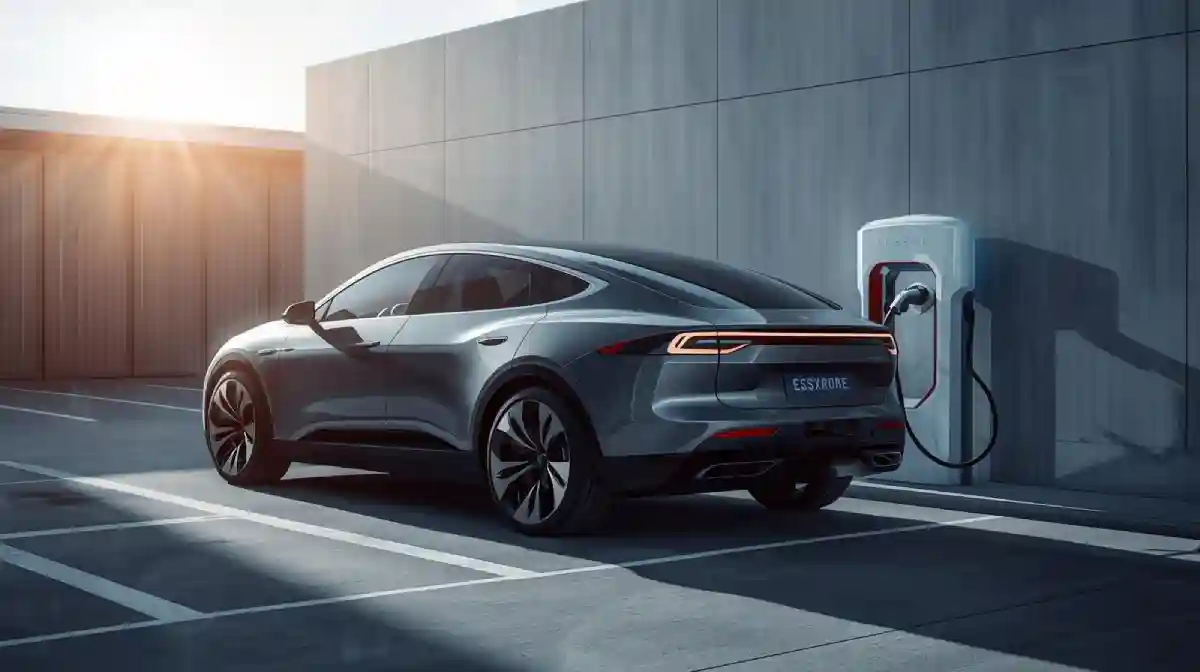
There is a major change coming to the roads worldwide. Electric cars are not loud like the old engines. They do make a sound but it is so faint that at times they don’t make a sound at all. Cars with electric engines are first perceived as a very unusual idea. In fact, they seem to be a rolling science project. But now they are found not only outside homes, schools, and shopping centers but also in small towns where even big changes take time.
People used to ask if the car could travel the necessary distance and where they could charge it. Also, they wondered if it was too costly. These questions are still present but the solutions become more and more obvious every year. Batteries can hold charge for an extended period of time. Furthermore, locations for charging are being set up everywhere. It is true that in some instances the price is still quite high, but not as extreme as before. There is a change, and this time it seems genuine.
Why Investors Are Paying Attention?
Money has a way of finding what is growing. Electric cars are not just about clean air or cool gadgets. They are about a huge market. Think about it. Almost every family dreams of owning a vehicle. Now imagine millions of those vehicles turning electric over time. That is not a small change. That is a complete reset of an entire industry.
Investors see opportunity in this reset. Not just in car companies, but everywhere around them. Battery makers. Charging station builders. Software developers. Even mining companies that supply materials for batteries. It is like a big web, and every thread has value.
There is also a sense of urgency. Governments in many places are pushing for cleaner transportation. Rules are changing. Fuel based cars might slowly lose their place. Investors do not want to be late to the party. Being early feels risky, but being too late can feel worse.
The Everyday Appeal of Electric Cars
Electric cars are not only about big ideas and policies. They are also about simple daily life. No more standing at fuel stations every week. Just plug in at home, like charging a phone. That alone feels like a small luxury.
Driving feels different too. Smooth acceleration, less noise, almost like gliding. For some people, that quiet ride feels strange at first. Then it becomes addictive. There is also less maintenance. Fewer moving parts means fewer things that can break. That saves time, money, and a lot of headaches.
Still, it is not perfect. Charging can take time, especially without fast chargers. Long road trips need planning. That part can feel annoying, like when the internet slows down right in the middle of something important. But improvements are happening fast. What feels like a problem today might not even be noticed tomorrow.
A Small Digression About Change
Change is funny. People resist it, then suddenly accept it, and later wonder how things ever worked the old way. Think about mobile phones. Or online shopping. Electric cars might follow the same path.
At first, only a few curious people tried them. Then early adopters join. Then the crowd follows. Finally, it becomes normal. Not exciting, not new, just part of life. That is when something truly succeeds. Electric cars are somewhere in the middle of this journey right now.
Investment Beyond Cars
Investment Sometimes we associate investment with only buying shares of car companies but this is only a small segment of the story. Outside the car itself, the main experiment lies in all the things around the car. Charging infrastructure is a great example.More electric vehicles indicate more charging locations. Not only cities, highways but also rural areas should have access.
The business of building and managing these networks is helping these companies become major players. Battery technology is yet another factor. Excellent batteries refer to longer distance, quicker charging, and lower price. There is a big drive for research in this field. New substances, more intelligent concepts, and even recycling techniques are under consideration. Investors are anxious to see the next breakthrough since it could make a huge impact. Energy is also a part of the issue.
The electricity in electric automobiles powers them, and one of the most significant points is the origin of the electricity itself. Electric utility companies relying on solar and wind can naturally be intertwined with EVs.This provides them with a much cleaner cycle. Energy companies are becoming more and more aware of this, and some are even completely transforming their business models.
Risks That Cannot Be Ignored
It would be nice if everything was smooth and easy, but that is not how real life works. There are risks. Big ones.
Some of the battery materials, like lithium and cobalt, are in short supply. It is very costly and environmentally hazardous in some cases to extract them from the earth. Furthermore, supply chains are often complicated and prices can be very volatile. This has an impact on the whole battery industry. Besides, technology is a very dynamic thing.
A company appearing very strong nowadays may hardly survive if it doesn’t come up with a breakthrough innovation. Competition is very stiff. Besides the numerous newcomers, the big players are also trying to change their image. It is almost like a race where the track is consistently changing.
There is also the question of infrastructure speed. If charging networks do not grow fast enough, adoption could slow down. People need convenience. Without it, excitement fades.
The Emotional Side of the Shift
There is something emotional about this transition. Cleaner air. Less noise. A sense of moving toward something better. It is not just about money or machines. It feels like progress in a human way.
At the same time, there is nostalgia. The sound of engines, the culture around fuel cars, the memories. Change always leaves something behind. That mix of excitement and hesitation makes this moment interesting.
Where the Future Starts to Take Shape!
Looking ahead, the road feels both clear and uncertain. Electric cars are expected to become more common, but the speed of that change depends on many factors. Technology, policy, consumer behavior, and even global events all play a role. It is like trying to predict the weather a month from now. Some trends are obvious, others surprise everyone.
One thing seems likely. Electric cars will not remain a niche. They are moving toward the center of transportation. As costs drop and infrastructure grows, more people will consider them a normal choice rather than a bold experiment. That shift alone changes investment strategies in a big way.
The Role of Governments and Policies
Governments, however, are acting against the tide. Actually, a lot of them are coming up with incentives to entice people to buy electric vehicles. Tax promotion, financial aid, tightening emission regulations, etc. are the ways of molding the market. However, these interventions can either accelerate or decelerate the process depending on their mode of implementation. In fact, there are times when the policy shift is so rapid that it makes the investor’s head spin.
Today’s advantage may be turned into an absence of advantage tomorrow. Nevertheless, the total trend is obvious. Environmentally friendly transport has become a major concern in a lot of places. That is why an environment where electric vehicles can thrive has been developed. It is mainly metropolises that are going ahead up the chain. They are campaigning for emission reduction, better mobility, etc.
One of the components is the electric bus, the electric shared ride and the improved public transport system. Besides the passenger cars, these niches offer an additional source of investment opportunities.
A Slight Pause to Notice Something
Focusing only on big cities and large markets is tempting and easy. However, our attention should not be diverted away from small towns and rural areas by the complementarity of the adoption. In the future, infrastructure should be extended to those places.
The aspects of affordability in these locations are of utmost importance. The future is not only built in glamorous urban centers. It spreads gradually and reaches even the most forgotten places. It is there that real transformation occurs.
Technology That Keeps Evolving
Electric vehicles are quite remarkable today, but they are also evolving. Their driving range keeps extending. Their recharge durations keep getting shorter. Their mind, i.e. software, is getting sharper. And guess what? Some models get new versions like a smartphone, which means the car can be better even after purchase. This concept however still seems a bit far-fetched. Driverless cars are yet another aspect of the scene.
Though the technology is not quite perfect, it coincides with electric automobiles in several ways. As a pair, they are capable of completely transforming the way we travel. Visualize self-driving vehicles that operate on renewable energy and are capable of mutual interaction among themselves. Although this scenario comes from a distant future, there are certain aspects of it that are already present.
Market players are keenly following these movements. Innovation can eliminate one at one’s chance and give another the opportunity for success in a snap. In such a situation, it is of great importance to keep pace with the time. Without any clue, one may easily make a wrong move.
The Business Ecosystem Expands
The ecosystem around electric vehicles keeps growing. Startups bring fresh ideas. Established companies bring scale and experience. Partnerships form across industries. Car makers work with tech firms. Energy companies collaborate with infrastructure providers. It is a busy space, full of movement.
There is also a rise in services. Battery swapping, subscription models, and shared mobility options are gaining attention. Not everyone wants to own a car. Some prefer access over ownership. That changes how value is created and captured.
Even insurance and financing models are adapting. Electric cars have different risk profiles and cost structures. This leads to new business approaches. Investors who look beyond the obvious may find interesting opportunities here.
Challenges That Still Matter
Even with all the excitement, there are still some challenges ahead. Charging speed and availability are two areas that definitely need improvement. Battery recycling is becoming a major topic of concern. Environmentally the benefits depend on the use of clean energy sources. Otherwise, the effect is significantly diminished. Besides that, there’s always the question of price. Electric vehicles have to be made affordable for most people. If not, their progress could be significantly hindered.
Companies are trying to solve this issue but it is a long process. Variations from one country to another only add to the complexity. What is suitable in one place may not be the case in another. Differences in infrastructure, income levels, and policies are quite extensive. Investors have to familiarize themselves with these dissimilarities instead of guessing that the same formula works for all.
A Human Perspective on Investment
Even with all the excitement, there are still some challenges ahead. Charging speed and availability are two areas that definitely need improvement. Battery recycling is becoming a major topic of concern. Environmentally the benefits depend on the use of clean energy sources. Otherwise, the effect is significantly diminished. Besides that, there’s always the question of price. Electric vehicles have to be made affordable for most people. If not, their progress could be significantly hindered.
Companies are trying to solve this issue but it is a long process. Variations from one country to another only add to the complexity. What is suitable in one place may not be the case in another. Differences in infrastructure, income levels, and policies are quite extensive. Investors have to familiarize themselves with these dissimilarities instead of guessing that the same formula works for all.
FAQs
Yes. They are mostly better. Electric cars do not release dirty smoke while driving. So the air becomes cleaner. That is good for people & nature. Making batteries can cause some harm. Electric cars still help reduce pollution more than normal cars over time.
An electric car battery can run many years. Around 8 to 15 years. It slowly loses a little power with time. Like a phone battery. But it still works fine for daily use. New batteries are getting better. So they last longer than before.
Charging is usually cheaper than filling petrol or diesel. Charging at home costs less & easy. Like charging a phone at night. Public fast chargers can cost more. But overall many people spend less money on running an electric car.
Yes. They look like a smart choice. More people are buying them & many places support them. They help keep the air clean & save money over time. There are still some small problems. But things are improving little by little.
Conclusion
Electric vehicles are definitely not just a passing fad. They represent a big change in how transportation and investments are going to work. The story is far from over as there are still lots of things we don’t know, problems for which we don’t have ready answers, and at the same time potential that is both thrilling and scary.
For a platform like Universal Link Media, discussing this issue is like talking about a moving world. One where technology, environment, and economics are so intertwined that it’s hard to say which one is dominating. By the way, EVs are right in the middle of that and are changing the future in some subtle way. Even though things might get rough a little bit on the way to the future, we can rest assured that there will be a few bumps, detours, and possibly even a couple of wrong turns.
However, the general trend seems to be that transport is undergoing change and investment is reacting quite promptly to that. Then, at one point on that seemingly quiet road, an electric car silently passes by, most probably with hardly anyone noticing it, but actually, it carries a very small portion of the future with it.