





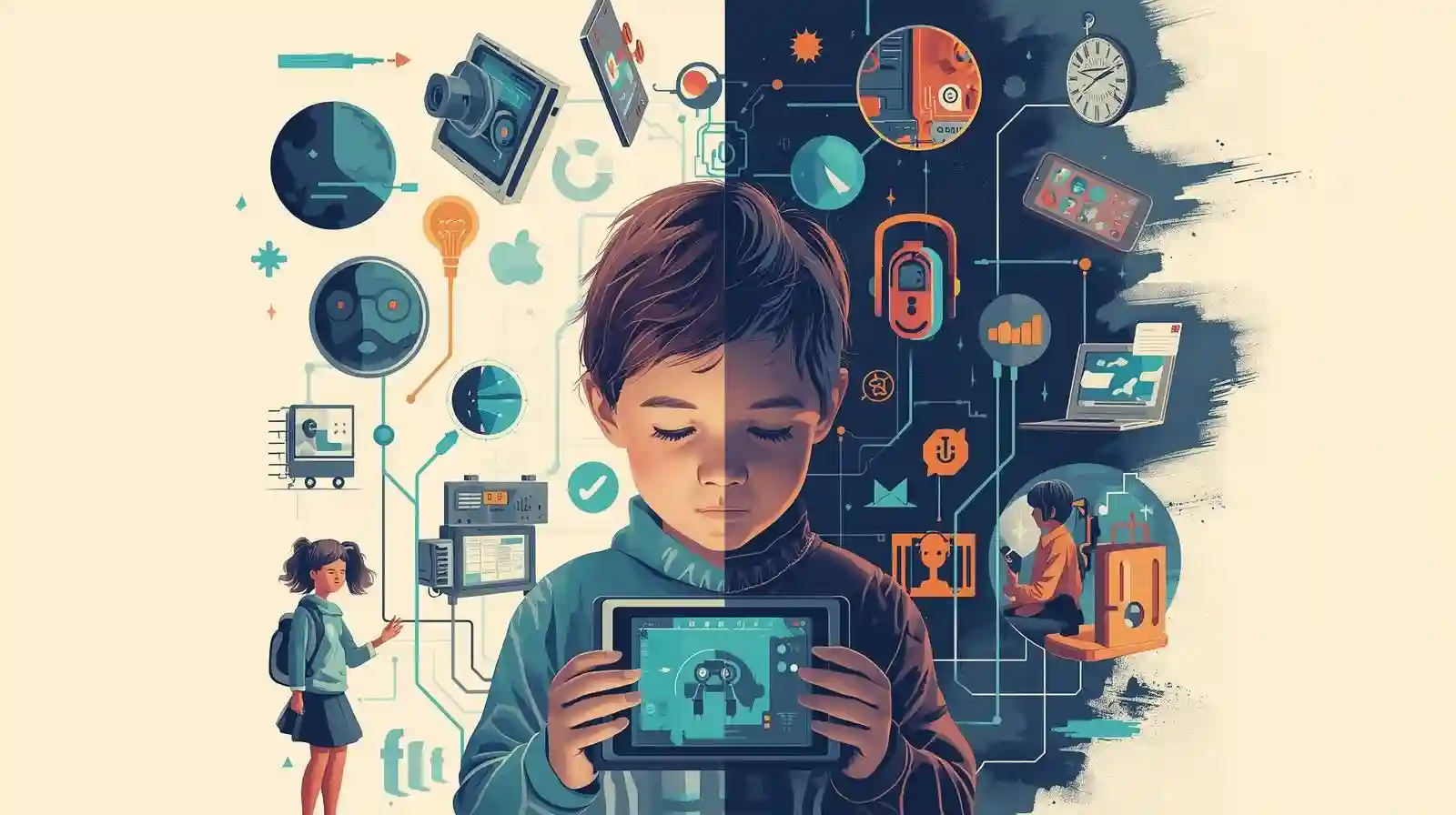
Children nowadays live surrounded by screens. Phones are always to be found on the table. Tablets carry along in schoolbags. Smart TVs even occasionally answer back. By 2026 this will be considered normal, almost boring. A little one will be able to swipe even before putting on the shoes. That is going to sound pretty crazy and funny at the same time.
Technological products are no longer just a one, off tool. They have become a part of everyday routine, like having breakfast or bedtime stories. This brings joy, worries, and a lot of mixed feelings.
Some days tech feels like a magic helper. Other days it feels like a noisy guest that never leaves. That is the real story.
Technology has a multifaceted impact on children, it can be the source of both positive and negative, peace and chaos, order, and confusion.
Learning Gets a Digital Boost
Learning has changed a lot. Kids now learn letters from bright apps that sing and dance. Math games cheer when answers are right. Science videos show planets spinning like toys. This makes learning fun and fast. A kid who once felt bored with books might light up when a screen joins the lesson.
By 2026 schools use more smart tools. Homework comes with videos. Teachers send voice notes. Kids can ask a question and get an answer in seconds. That feels powerful. Knowledge feels close, not far away.
Still, learning is not only about speed. Sometimes kids click fast but think slow. Screens can rush things. A kid may know facts but miss deep thinking. That is a quiet downside. Learning needs pauses, daydreams, and even boredom. Those moments help ideas stick.
Playtime Looks Different Now
Play used to mean running, hiding, and muddy shoes. That still happens, just less often. Now play also means games on screens. Kids build worlds in games. They race cars that do not exist. They dress characters and tell stories through avatars.
This kind of play sparks creativity. Kids learn rules, strategy, and teamwork. Some even learn coding without knowing the word for it. That is pretty cool.
But there is a flip side. Too much screen play can replace body play. Legs get tired less often. Hands swipe more than they throw. A kid may laugh online but feel quiet offline. Balance matters here. A mix of screens and swings keeps play healthy.
Social Life Goes Online
Friends no longer live only next door. Children communicate with their classmates by means of chats and games. They exchange jokes, artwork, and funny videos. For introverted children, this may evoke an experience of safety and comfort. Communicating via a screen seems less difficult than in person.
In 2026, even toddlers will be adept at sending messages. They will get the idea of likes and views, although they might not completely grasp those notions.. This shapes how kids see themselves. A post with many likes feels good. A post with few likes can feel heavy.
Kindness matters more than ever. Words online stick longer. A joke can turn into hurt. Kids need help learning empathy in digital spaces. Screens do not show faces well, so feelings can get lost. Teaching care and respect becomes a big deal.
Attention Spans and Busy Minds
Tech moves fast. Videos jump. Games flash. Apps buzz. Kids get used to quick fun. Sitting still can feel hard after that. Attention spans may shrink, or at least change shape.
Some kids bounce from one thing to another. Focus slips like soap in water. Teachers and parents notice this. It is not that kids are lazy. Their brains are just trained for speed.
At the same time tech can help focus too. Calm music apps help kids relax. Drawing apps keep hands busy and minds quiet. It depends on how tech is used. Fast and loud tools excite. Slow and gentle tools soothe.
Emotions in a Digital World
Technology touches feelings more than people think. A fun game can lift a mood. A mean comment can drop it fast. Kids may not always know why they feel upset. Screens hide causes.
In 2026 mental health talks start earlier. Kids learn words like calm and stress. Some apps teach breathing and kindness. That is a good step.
Still screens can steal sleep. Blue light glows late. Games beg for one more round. Tired kids feel grumpy and sad more easily. Sleep is a quiet hero here. Turning off screens helps hearts as much as heads.
Parents Teachers and Gentle Limits
Adults play a big role. Not as tech police, but as guides. Rules help when they make sense. No screens at dinner. No tablets in bed. Those simple lines protect family time and rest.
Kids copy what they see. If adults scroll all day, kids notice. If adults read, talk, and laugh offline, kids notice that too. Balance is learned by watching.
Conversations matter. Talking about what kids watch and play builds trust. Asking about games and shows shows care. Tech does not have to be a secret world.
Looking Ahead With Hope
Technology certainly isn’t an enemy. It is a tool with many faces. In 2026 kids will be more tech savvy than ever. They will be able to operate it, create with it, and have a good time with it. However, they also need to be taught that it is good to take breaks.
The future is a bit of a mixture but still hopeful. Kids have superpowers in terms of learning faster, connecting with more people, and being more creative than any other generation in history. However, on the other side, they still need to go outside and play, listen to bedtime stories, and have some time to themselves.
The gist of the matter is not more or less technology. It is about using technology in a better way. The screens which we use to nurture our growth and happiness are wonderful. However, when screens start to take too much of your time, it is necessary to take a break.
Kids deserve a world where the use of technology is just a way of helping them grow up kind, curious, and strong. Getting that balance right is tricky, messy, and totally worth it.
Technology and Imagination Growing Together
One lovely thing about tech is how it feeds imagination. Kids make stories using apps. They draw dragons, cities, and funny animals with bright colors. Some kids record tiny movies with toys as stars. This builds confidence. A kid thinks hey this idea came from my head. That feeling matters. Still imagination needs space too. Quiet time helps ideas bloom. A mix of screens and silence keeps creativity alive and kicking.
Preparing Kids for a Tech Filled Future
By 2026 technology is everywhere. Jobs use it. Homes use it. Even toys feel smart. Kids who learn tech early feel ready, not scared. They learn problem solving, teamwork, and curiosity. These skills travel far. At the same time kids need values. Kindness. Patience. Real world skills like sharing and listening. When tech grows alongside heart and mind, kids stand strong. That is the sweet spot everyone hopes for.