






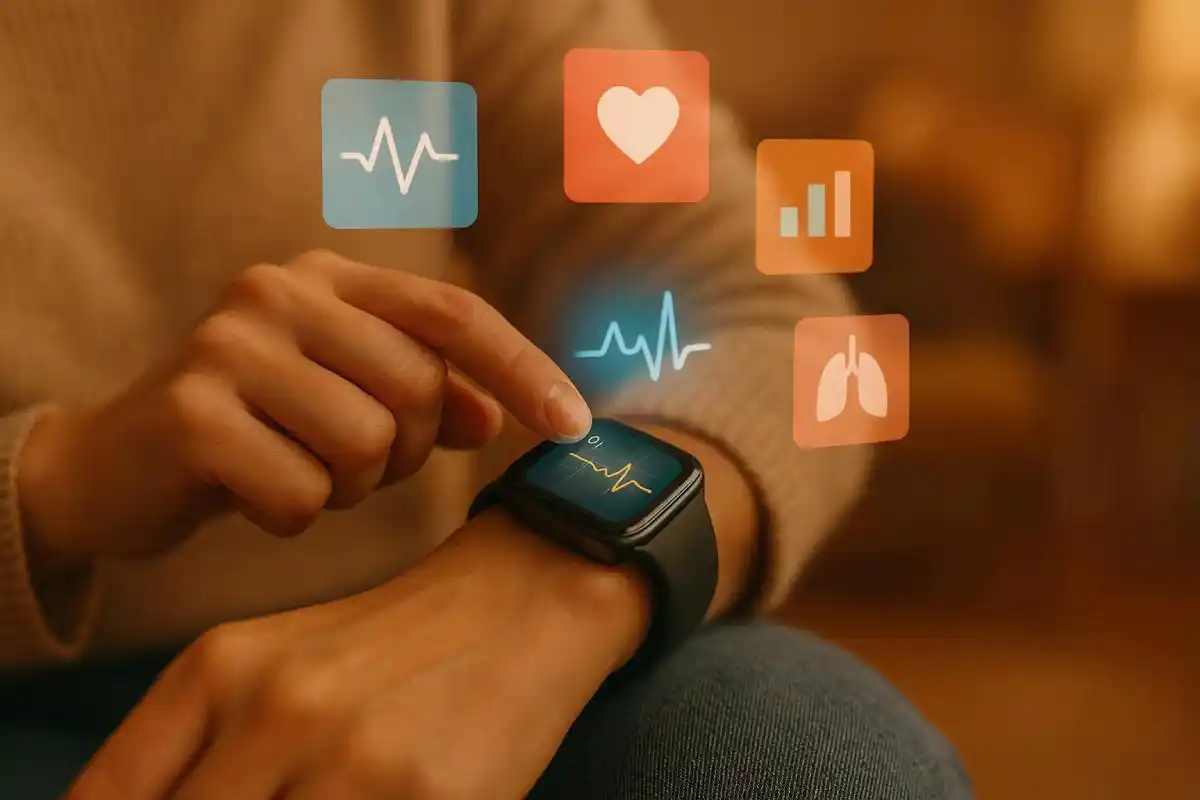
A smartwatch does not look like a big deal at first. Just a small screen on the wrist. Maybe used to check time or see messages. But after some weeks of daily use it starts to feel like a quiet companion that notices things most people ignore. Steps taken in a day. Heart beating a bit faster after climbing stairs. Sleep that did not feel right even though it seemed long enough. It slowly builds a picture of health without asking for much effort.
One person who started using a smartwatch mostly for step counting began to notice strange patterns. Some days showed high activity but I still felt tired. Other days had fewer steps but more energy. The watch was not giving answers but it was pointing to questions. That felt useful in a simple way.
How does a smartwatch track daily activity?
A smartwatch uses small sensors inside it to count movement. Every step is tracked by motion sensors. It sounds basic but seeing the number at the end of the day can be surprising. A lazy day might show only a few thousand steps. A busy market visit might cross ten thousand without even noticing. The watch makes it visible. That visibility changes behavior a little. Like choosing stairs instead of lifts just to see the number go up.
It is not always accurate though. Sometimes it counts hand movements as steps. Washing clothes or cooking might increase the count. That can feel funny but still the general idea stays useful. It gives a rough sense of how active a day was.
Can a smartwatch really monitor heart rate properly?
Most smartwatches use light sensors to check heart rate. It flashes green light into the skin and reads blood flow changes. It sounds a bit technical but it works most of the time. During rest it gives a steady number. During walking or running it goes higher.
There was a moment when a user noticed the heart rate going unusually high during a simple walk. It felt normal but the watch showed a spike. That led to slowing down and taking a break. Maybe it was nothing serious but that small alert created awareness. It is not a doctor but it can nudge someone to pay attention.
Sometimes the readings jump around a bit. Loose strap or sweat can affect it. So it is not perfect. Still it helps in understanding how the body reacts to daily activity.
Sleep tracking is another feature that feels oddly personal. The watch tries to guess when sleep starts and ends. It shows deep sleep and light sleep in simple graphs. Some nights look smooth and calm. Others look broken with small gaps.
A person once thought sleep was fine because it lasted seven hours. The watch showed frequent wake ups during the night. That explained morning tiredness better than just counting hours. It does not fix sleep but it shows patterns that are easy to miss.
Does sleep tracking actually help improve rest?
Sleep tracking helps by showing patterns. It does not magically improve sleep. But when someone sees that late night phone use leads to poor sleep data it creates a small push to change habits. Even reducing screen time a little before bed can reflect in better sleep scores.
There is some doubt too. The watch is guessing sleep stages based on movement and heart rate. It might not be fully accurate. But even if it is not perfect the trends over time feel meaningful. Good nights and bad nights become easier to compare.
Another quiet feature is reminders to move. After sitting for too long the watch gives a gentle buzz. At first it feels annoying. But over time it becomes a small nudge to stand up, stretch or walk a few steps. For people working long hours at desks this can matter more than expected.
Calorie tracking is there too but it feels less reliable. The numbers look precise but they are mostly estimates. Still they give a rough idea of how much energy is used in a day. That can be helpful for someone trying to stay active or manage weight.
There is also stress tracking in some watches. It looks at heart rate changes and tries to guess stress levels. This part feels a bit strange. Can a watch really understand stress? Maybe not fully. But it can detect physical signs like increased heart rate. Seeing a high stress reading during a busy day can remind someone to pause and breathe.
Can a smartwatch help notice early health issues?
A smartwatch cannot diagnose diseases. That is clear. But it can show unusual patterns. Like sudden changes in heart rate or very poor sleep over many days. These small signals can encourage someone to check with a doctor earlier than they might have otherwise.
There was a case where irregular heart rate alerts led someone to seek medical advice. It turned out to be something minor but it could have been ignored without that alert. That is where the watch becomes more than just a gadget.
It also builds a kind of daily awareness. Health stops being an abstract idea and becomes something visible in numbers and trends. Not perfect numbers but still useful enough to think about.
Some people might feel overwhelmed by too much data. Constant checking can become a habit. That is something to watch out for. The goal is not to obsess over every number but to notice general patterns.
Smartwatches also connect with mobile apps. These apps store long term data. Looking at weekly or monthly trends gives a better picture than daily numbers. A single bad day does not mean much but repeated patterns do.
Battery life can be a small issue. Charging every day or two can feel like a chore. Sometimes the watch is left off during charging and that means missing some data. It is not a big problem but it breaks the continuity a bit.
Comfort matters too. Wearing something on the wrist all day and night is not for everyone. Some people remove it during sleep because it feels uncomfortable. That means losing sleep tracking benefits.
Even with these small issues the overall experience feels helpful. Not in a dramatic way but in a quiet steady way. It is like having a mirror that reflects health habits slowly over time.
There is also a bit of motivation hidden in it. Seeing progress feels good. Closing daily activity rings or reaching step goals creates a small sense of achievement. It is simple but it works for many people.
The watch does not replace healthy habits. It only highlights them. Walking more still requires effort. Sleeping better still needs discipline. The watch just makes these things more visible.
For some people that visibility is enough to start small changes. Taking a short walk in the evening. Going to bed a little earlier. Drinking more water after noticing fatigue.
It is not about perfection. It is about small awareness that builds over time. That is where the smartwatch quietly fits into daily life without making a big noise about it.
Is a smartwatch useful for fitness beginners?
For beginners a smartwatch can feel like a simple guide. It does not tell exactly what to do but it shows what is being done. That difference matters. Someone starting with light walks can see progress in steps and heart rate changes. It gives a sense of movement even if it is slow.
There is no pressure to be perfect. Missing a goal one day does not break anything. The watch just resets the next day. That kind of quiet reset makes it easier to continue without feeling guilty.
More experienced users might use advanced features like workout tracking or pace monitoring. But for beginners even basic step counting can be enough to start building awareness.
How accurate are calories and fitness data on a smartwatch?
Calorie tracking is more like an estimate than a fact. The watch uses age weight and movement data to calculate it. It can be off sometimes. Maybe quite a bit off. But it still gives a general direction.
Fitness data like steps and heart rate feels more reliable than calories. Even then it is not perfect. Loose straps or fast movements can affect readings. It is better to see the data as a guide rather than exact truth.
There is also something about consistency. Even if the numbers are not perfect they are consistent within the same device. That makes it easier to compare one day to another.
Some watches also track blood oxygen levels. This feature became popular in recent years. It can show how well oxygen is being carried in the blood. It sounds serious but for most people it just stays as a background number. Occasionally checked but not deeply analyzed.
Can a smartwatch reduce stress or anxiety?
A smartwatch does not remove stress. Life still brings its own challenges. But it can create small moments of awareness. Breathing reminders or stress alerts can nudge someone to pause for a minute.
There was a moment when a stress alert appeared during a busy afternoon. It felt unexpected because the person did not realize they were feeling stressed at that time. That small alert led to taking a short break. Just sitting quietly for a few minutes. It did not solve everything but it helped a little.
Over time these small pauses can add up. They create a habit of checking in with the body instead of ignoring it completely.
Another aspect is goal setting. Smartwatches often allow setting daily targets. Steps calories or active minutes. These goals can be motivating but sometimes they feel like pressure. Especially on busy days when meeting them feels difficult.
It helps to keep goals realistic. Setting very high targets can lead to frustration. Small achievable goals feel better and keep the experience positive.
Notifications are another mixed part. Seeing calls and messages on the wrist is convenient. But constant alerts can feel distracting. Some users turn off most notifications to keep the watch focused on health tracking.
Weather updates, timers and alarms are small extras that become useful over time. They are not directly related to health but they make the watch feel more integrated into daily routine.
Durability also matters. Wearing it during rain or workouts means it needs to handle water and sweat. Most modern smartwatches do this well but still require some care.
There is also the question of dependency. Can someone rely too much on the watch? That can happen. Checking heart rate too often or worrying about every small change can create unnecessary stress. Balance is important here.
The watch should support awareness, not control it completely. Ignoring it sometimes is also fine. It does not need constant attention.
Is it worth using a smartwatch just for health tracking?
For many people it can be worth it. Not because it transforms health overnight but because it builds awareness slowly. It shows patterns that are easy to miss in a busy life.
For someone already active it adds more detail. For someone less active it adds a gentle push to move a bit more. That flexibility makes it useful for different types of users.
At the same time it is not essential. Healthy habits can exist without any device. Walking, eating well and sleeping properly do not require a smartwatch. The device only adds a layer of visibility.
Some people try it for a few weeks and then stop using it. Others keep using it daily without thinking much about it. It depends on personal comfort and interest.
There is also a small sense of connection with the body that grows over time. Seeing numbers every day might seem boring at first. But slowly they start telling a story. A story of busy days, restful nights and everything in between.
That story is not perfect or complete. But it is there quietly in the background. Always updating, always changing.
Conclusion
In the end a smartwatch feels less like a gadget and more like a subtle reminder. A reminder to move a little more. To rest a little better. To notice small changes before they become big ones.
It does not demand attention loudly. It just sits there on the wrist doing its job quietly. And maybe that is why it works for so many people without making a big deal about it.
FAQs
Yes. Most smartwatches monitor health not only during the day but also during sleep. They keep a log of steps, heart rate & occasionally stress levels all the time. However, tracking can stop when charging or if the watch is taken off. That is why the data may not always be entirely complete.
No. A smartwatch is not a replacement for seeing a doctor or getting medical advice at all. It merely tracks some basic health data, such as your heartbeat or the way you sleep. Such information might aid your understanding to some extent. Nevertheless, if there are health issues of a serious nature or if the monitoring results turn out to be very different from expected ones, it is a must that you seek consultation with a competent healthcare provider.
Smartwatch data are not always accurate. They are based on sensors and estimates, which can be influenced by your movement, fit or other factors. Although trends and patterns are generally trustworthy, exact figures should be perceived as approximate rather than precise measurements.
Yes. Smartwatches assist you to develop improved day to day habits. They push you to make small adjustments in your life as they regularly remind you to move, set activity goals & track your sleep. These minor things, for instance, being more active or going to bed earlier, can happen to become your regular habits very easily and naturally.