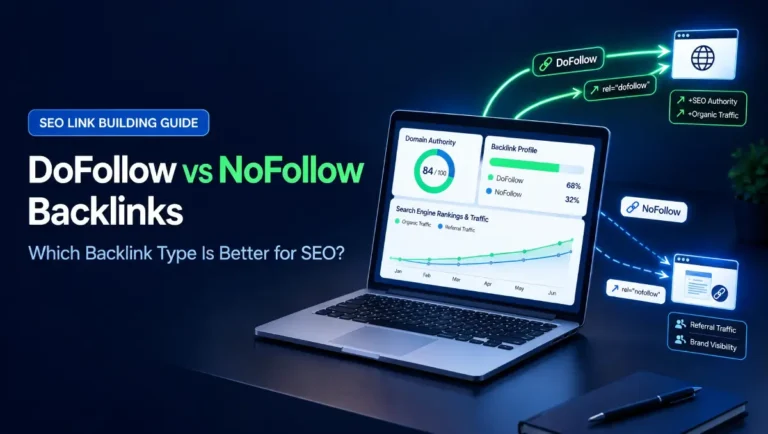


Backlinks are a common part of SEO. Still, one question comes up again and again: are dofollow backlinks better than nofollow backlinks? The short answer is yes, in many cases. But that does not mean nofollow links have no value.
For businesses trying to improve search rankings, the difference matters. A link from a trusted website can bring visitors, build trust and help people discover a brand. The real value depends on where the link comes from and why it exists.
At Universal Link Media, backlink quality deserves more attention than simple link counts. A hundred weak links are not always better than a few links from useful and trusted websites. This is where understanding dofollow and nofollow links becomes important.
What Are Dofollow and Nofollow Backlinks?
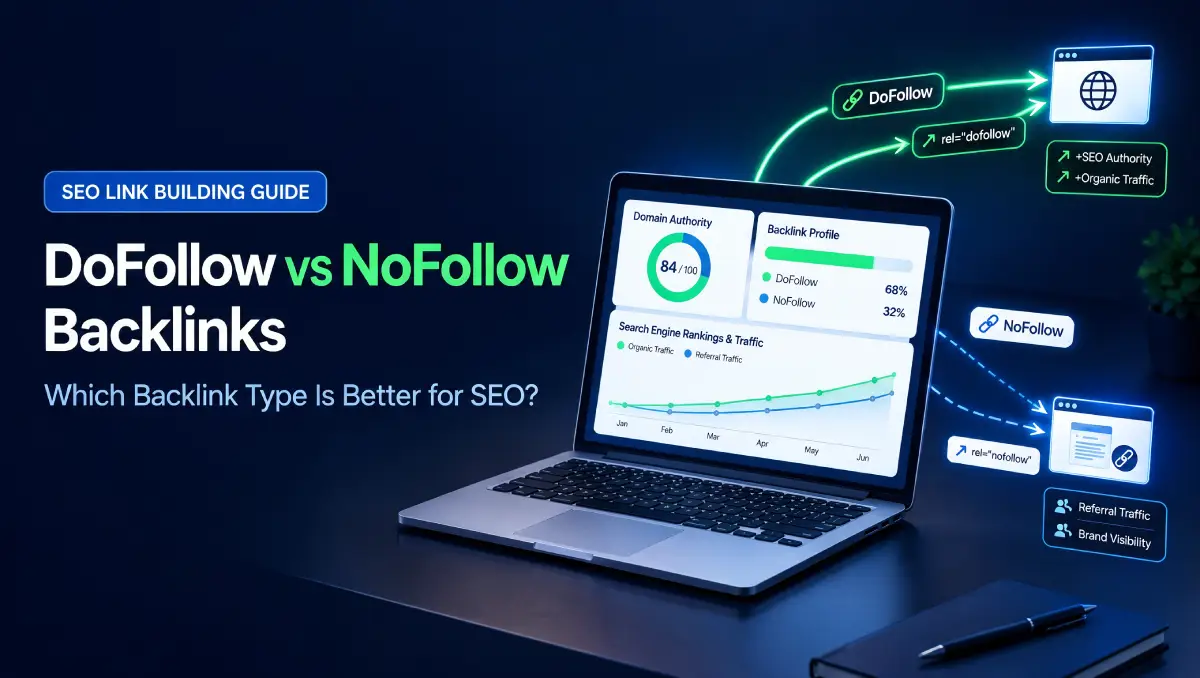
A dofollow backlink is a normal link that search engines can follow and may use when understanding a website’s importance. The word “dofollow” is a common SEO language. It is not a special HTML tag.
A nofollow backlink uses a link attribute that tells search engines the website does not want to endorse the linked page in the usual way.
Here is a simple example. A local food blog links to a restaurant’s website after writing about its best dishes. That link may help the restaurant gain visitors and search visibility. If the blogger marks the link as nofollow, the restaurant can still receive visitors, even though the link sends a different signal to search engines. Both links can be useful. Their value simply works in different ways.
Are Dofollow Backlinks Better Than Nofollow Backlinks?
Yes, dofollow backlinks are often more useful for direct SEO value because they can pass ranking signals. However, nofollow backlinks can still support a website’s growth.
Consider a small online shop that receives a dofollow link from a respected industry blog. The link may help search engines understand that the shop is worth noticing. Now imagine the same shop gets a nofollow link from a popular news website. Readers may click it and visit the shop in large numbers.
Neither result should be ignored.
Feature | Dofollow backlinks | Nofollow backlinks |
Direct SEO value | May pass ranking signals | Usually treated as a hint |
Referral traffic | Possible | Possible |
Brand awareness | Yes | Yes |
Search ranking impact | Can help | May contribute indirectly |
Best use | Relevant editorial links | Exposure and natural link diversity |
Google treats nofollow as a hint rather than an absolute rule. This means search engines may consider other signals when processing a link. It is better to focus on the whole picture instead of assuming that every nofollow link has zero value.
Why Do Dofollow Backlinks Matter for SEO?
Dofollow backlinks can help search engines discover pages and understand how websites relate to one another. When a relevant website links to a useful page, it may act as a sign of trust.
For example, a home repair company could earn a link from a respected property advice website. If the link points to a helpful guide about fixing a leaking tap, it makes sense to readers and search engines.
The topic matches. The link has a clear reason to exist. That is usually more useful than a random link placed on an unrelated website.
Still, one link cannot guarantee a top ranking. Search results also depend on page quality, website performance, content relevance and competition. Dofollow links work best as part of a wider SEO plan.
Universal Link Media focuses on the idea that relevance should come before volume. A link should make sense on the page where it appears. Otherwise, even a link that looks good in a report may offer little real value.
Can Nofollow Backlinks Help a Website Rank Higher?
Nofollow backlinks can help a website in several ways, even when their direct ranking benefit is uncertain.
A link from a busy forum, news story or social platform can introduce a business to new readers. Some readers may visit the website, share its content or mention the brand elsewhere.
These links can also make a backlink profile look more natural. Real businesses receive links from many places. Not every mention comes with a dofollow attribute.
For instance, a small software company might receive a nofollow link from a popular discussion forum. People could visit the product page and later recommend the software on their own websites. Those independent mentions may create new opportunities.
There is no promise that this will improve rankings. Still, the traffic and exposure can make the link worthwhile.
Which Backlinks Should Businesses Focus On?
The best approach is to seek relevant links from trustworthy websites rather than chasing one link type alone.
Backlink source | Potential benefit | What to check |
Relevant industry blog | SEO value and targeted visits | Content quality and topic match |
Trusted news website | Exposure and referral traffic | Genuine editorial coverage |
Helpful resource page | Relevant visitors | Whether the link helps readers |
Community discussion | Referral traffic and awareness | Genuine participation |
Paid or sponsored placement | Brand exposure | Proper link disclosure |
A link from a smaller specialist website can be more useful than one from a large website with no connection to the business. A gardening store linked from a gardening guide makes sense. The same store linked from an unrelated casino page raises questions.
It is also worth checking the page itself. Is the content helpful? Does the website attract real readers? Is the link placed naturally? These details often matter more than a simple dofollow label.
How Can You Check Whether a Backlink Is Dofollow or Nofollow?
Checking a backlink does not need to be difficult. Open the page containing the link and inspect its HTML code.
Look for the link’s real attribute. If it contains nofollow, the link has a nofollow hint. If it contains sponsored or ugc, those labels provide extra context about the link. A link without these attributes is often called dofollow in SEO reports.
Tools such as Google Search Console and backlink analysis platforms can help review links. However, reports may differ, and no tool can promise how Google will treat every individual link.
Do not judge a backlink by its label alone. Check the website, page topic and reason for the link too.
Final Thoughts
So, are dofollow backlinks better than nofollow backlinks? For direct SEO value, dofollow links often have the advantage. But nofollow links can bring real visitors, improve brand awareness and help people find a business.
The smarter approach is to build a useful backlink profile with links from relevant sources. Avoid buying large numbers of low-quality links just to increase a report’s total.
Universal Link Media supports a quality-first approach to link building. Good links should help people discover useful content, not just make SEO numbers look impressive. Over time, that practical mindset is more valuable than chasing a perfect dofollow count.