

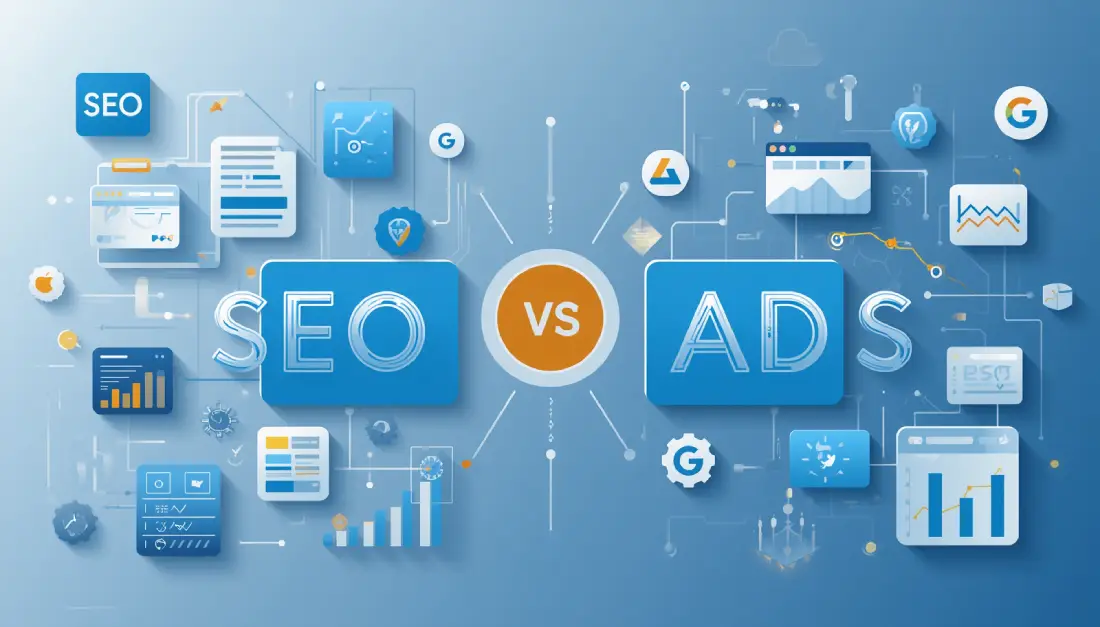
For a business trying to get noticed online in 2026. SEO and paid ads can feel like two people pulling the same rope. Both can bring visitors. Both can bring sales. Both can also waste time and money when used without a clear reason.
Universal Link Media has seen this question come up again and again. Should a business spend money on Google Ads now? Or should it spend months building organic rankings.
There is no single winner. The better choice depends on the business. The product. The budget. And how quickly customers need to arrive. Still. 2026 has changed the game a little.
Google now uses AI Overviews and AI Mode more heavily in search. Google says the basic SEO rules still matter for these AI search features. Helpful and original content still has a place.
Paid search is changing too. Google is moving Dynamic Search Ads toward AI Max for Search campaigns from September 2026. That means paid search is becoming more automated as well. So the old SEO versus PPC argument feels a bit outdated now. The real question is different.
Is SEO still worth it in 2026?
Yes. But SEO is not the quick traffic button some businesses expect. SEO works best when a company can wait and build something useful over time. A good page can bring visitors months after it was published. A strong service page can keep getting leads without paying for every click. That is the attractive part.
SEO can also build trust. Someone searching for a local service may see a company appear naturally several times. A useful guide. A service page. A case study. Maybe a review page. That repeated visibility can make a small business feel more established.
But there is a catch. Organic search is changing because AI answers can appear before traditional results. Some studies in 2026 have already found traffic changes when AI Overviews appear. One study found a roughly 15 percent drop in Wikipedia traffic after exposure to AI Overviews. That does not mean SEO is dead. Far from it. It means SEO needs better content now. Thin articles written only to target keywords are not enough. Pages need real answers. Original examples. Useful details. Clear information. Sometimes even a strong opinion helps.
Can paid ads bring results faster than SEO?
Usually yes. That is the biggest advantage of paid ads. A new business can create a campaign today and start appearing for selected searches much sooner than it could rank organically.
Consider a new dental clinic. The clinic may want patients searching for an emergency dentist near me. Ranking organically for that phrase could take time. A search campaign can put the clinic in front of those people much faster. The money part is obvious though. Every click has a cost.
The average Google Ads search click through rate across industries was 6.66 percent in WordStream data for 2025. The average conversion rate was 7.52 percent. These are useful benchmarks but not promises. Results can vary wildly by industry and campaign quality.
A campaign can also burn through a daily budget surprisingly fast. That is why paid ads often work best when the landing page is already decent. Sending expensive traffic to a slow page with weak information is a painful way to learn a lesson.
SEO vs Paid Ads. Which one gives better value?
SEO usually has better long term value. Paid ads usually have better short term control. That simple difference matters more than many marketing reports make it sound.
| Area | SEO | Paid Ads |
|---|---|---|
| Speed | Slow to build | Fast |
| Cost model | Mainly time and work | Pay for clicks or results |
| Long term traffic | Strong potential | Stops when spending stops |
| Testing | Slower | Faster |
| Control | Lower | Higher |
| Trust | Often stronger | Depends on the ad |
| Best use | Long term growth | Quick demand and testing |
What is better for a small business with a limited budget?
For a small budget. SEO often deserves the bigger share. But not all of it. A common mistake is spending every available dollar on ads before understanding which searches actually produce customers. A better approach can be simple –
- Start with a small paid campaign.
- Track which searches bring calls.
- Forms, Bookings Or sales.
Then build useful organic pages around the searches that show real business value. This gives the company something useful from both sides. Paid search provides quick feedback. SEO builds a longer asset.
For example, A local roof repair company might discover through ads that emergency roof repair gets better leads than general roof repair. That information is valuable.
The company can then improve its emergency roof repair page. Add real questions customers ask. Add service details. Add photos. Add areas served. Add clear contact options. The ad campaign and SEO work then support each other instead of sitting in separate boxes.
Is SEO cheaper than paid advertising?
Not always. This one gets repeated too often. SEO does not mean free traffic. Someone has to research topics. Fix technical problems. Write pages. Improve old content. Build useful links. Check the results. Sometimes a developer is needed too.
So SEO has a cost. The difference is that the cost is not normally attached to every visitor.
Paid ads are easier to measure in that sense. A business can spend 500 dollars and see what happened. SEO can take months before the same kind of picture becomes clear. The data below gives a simple view of the difference.
| Channel | Main cost | Main benefit | Main weakness |
|---|---|---|---|
| SEO | Content and specialist work | Long term visibility | Takes time |
| Paid Search | Ad spend and campaign work | Fast traffic | Costs continue |
| Both | Higher total effort | Wider search coverage | Needs good tracking |
Does AI search make SEO less important in 2026?
It makes old style SEO less useful. That is probably the better way to say it. Google says AI Overviews and AI Mode still rely on the same basic foundations that have long mattered in Search. Helpful and original content remains important.
The practical difference is that people may get part of an answer without clicking a normal organic result. This is especially important for simple questions.
Someone searching how long a passport lasts may not need to visit a website after seeing a direct answer.
But someone searching for the best accounting software for a growing company has a different problem. That person may want comparisons. Pricing. Screenshots. Reviews. Features. Real examples. That is where strong websites can still win.
In fact. Google has said that links shown in AI search experiences can help people explore useful sources and discover content they may not have found otherwise. So SEO is shifting from simply ranking a page to becoming a trusted source. That is a harder job. It is also probably a better one.
When should a business choose paid ads first?
Paid ads make more sense when speed matters. A new product launch is one example. A seasonal sale is another. A business entering a new city may also use ads before organic rankings catch up. Paid ads are especially useful when a company already knows its profitable customer search terms.
For example, a lawyer may know that certain legal service searches produce good consultations. Paying for those searches can make sense when one new client is worth much more than the advertising cost.
The key number is not clicks. It is a profitable conversion. A campaign with 500 clicks and no customers is not impressive. A campaign with 50 clicks and five valuable customers might be excellent. This sounds obvious. Yet plenty of campaigns still get judged by impressions and clicks first.
When should a business focus more on SEO?
SEO becomes more attractive when customers search for information before buying. Think about software. Travel. Home improvement. Education. Professional services. Health products. Technology.
People often have questions before they are ready to buy. Those questions can become useful pages.
A company that answers them well can become part of the buying journey before the customer even knows the brand. That is one of the strongest things about SEO. Paid ads usually ask for attention. SEO can earn it.
There is no guarantee of course. Search rankings move. Competitors improve. Google changes things. AI search adds another layer. Still. A useful website is an asset.
Should a business use SEO and paid ads together?
In most cases. Yes. This is where Universal Link Media sees the most practical value. Paid ads can handle urgent demand while SEO builds the foundation underneath.
A simple example is an online furniture store. Paid ads can promote a popular sofa during a sale. SEO can build pages around sofa size guides. Fabric comparisons. Room ideas. Cleaning advice. And buyer questions.
The ad catches the person ready to buy. The organic content helps the person still deciding. Both people matter.
There is also a useful testing loop. Paid ads can reveal which words and offers get attention. SEO can use those insights when building pages.
SEO can then show which topics attract strong organic visitors. Those topics may give paid campaigns new ideas. It becomes less like SEO versus ads. It becomes search working as one system.
What is the best SEO and paid ads strategy for 2026?
A sensible 2026 strategy starts with the customer rather than the channel.
- Find out what people search before buying.
- Find out which searches show strong buying intent.
- Test the most important ones with a controlled paid budget.
At the same time. Build useful organic pages around the topics that deserve long term visibility. Do not publish fifty weak blog posts just because an SEO tool says fifty keywords are available.
Ten genuinely useful pages can be worth much more. And do not keep an ad running just because it has clicks. If the campaign is not producing profitable actions. Something needs changing. The landing page, The search terms, The offer, The location, The audience Or the campaign itself. That kind of basic discipline still matters in 2026.
SEO is not dead. Paid ads are not magic. The strongest businesses usually treat both as tools with different jobs. For a business that needs customers this month. Paid ads may deserve priority. For a business building visibility for the next three years. SEO may deserve more attention. For many businesses. The sensible answer sits somewhere in the middle.
FAQs
SEO is usually better for long term visibility and lower dependence on ongoing ad spend. Paid ads are better when fast traffic matters. Many businesses get stronger results by using paid campaigns for testing while building organic visibility at the same time.
SEO often needs several months before meaningful results appear. Easy keywords can move faster while competitive searches may take much longer. Results also depend on the website, content quality, competition, links, technical health, and how much useful work gets done.
Google Ads can still be valuable when campaigns target strong buying intent and the cost per customer makes business sense. Ads become expensive when clicks are treated as success. Leads, sales, calls, bookings, and profit matter much more than traffic alone.
A new business often benefits from starting small paid campaigns while building SEO in the background. Ads can provide faster market feedback. SEO can create lasting visibility. The mix can change once real customers and conversion data starts showing what works best.