






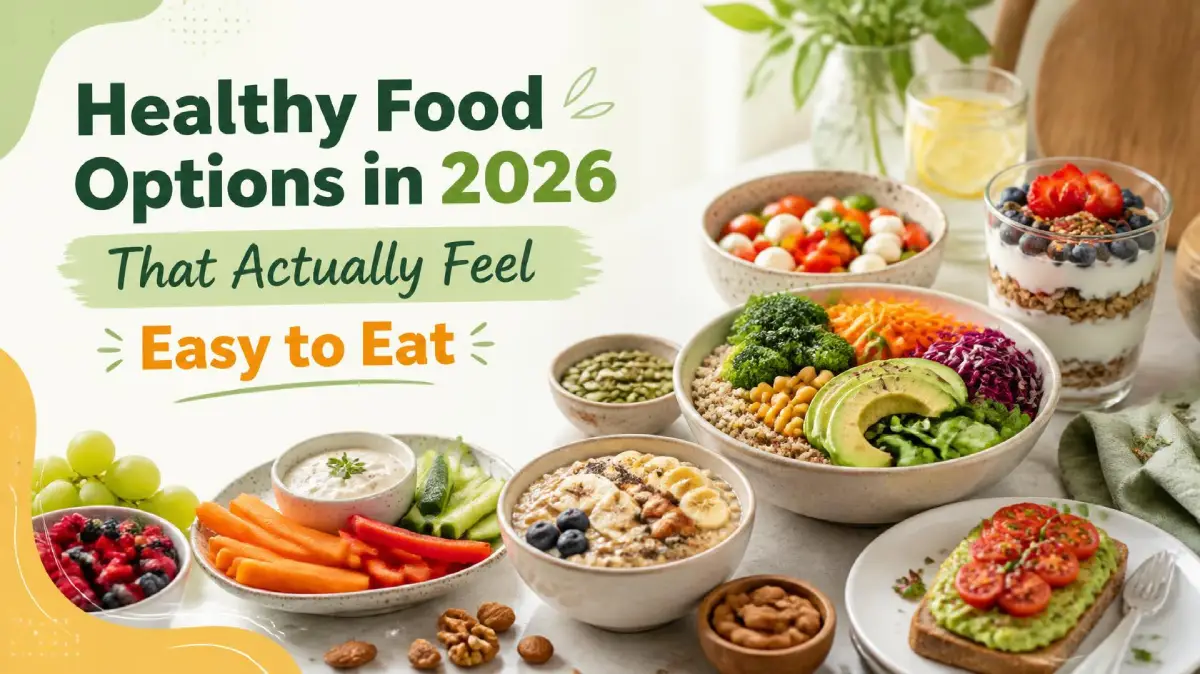
Healthy food options in 2026 are not really about eating perfect meals every single day. That idea gets tiring fast. A healthier plate usually means simple food that gives the body enough protein, fiber , vitamins , minerals and good fats without making every meal feel like a project.
A normal day might start with oats and fruit. Lunch could be rice with dal vegetables and curd. Dinner might be roti with paneer and a bowl of cooked vegetables. Nothing fancy. Nothing that needs a long shopping list. This kind of food still works in 2026 and honestly it is often easier to keep eating than trendy diet food.
Along with that, people are also paying more attention to filling and useful foods, rather than those that are just low in calories. For instance, a protein-rich diet has turned into a regular mealtime feature and also, fiber food has received increased attention too.
Fermented goods, seeds, whole grains, beans and several types of vegetables are gradually appearing more often.
What are the healthiest food options in 2026?
A few healthiest food options that can be easily included in regular meals are:-
. Eggs with whole grain toast and fruit.
. Oats with banana berries, nuts and plain yogurt.
. Dal with rice vegetables and curd.
. Chickpeas or rajma with roti and salad.
. Grilled fish with rice and cooked vegetables.
. Paneer with vegetables and a small portion of rice or roti.
. Plain yogurt with fruit and seeds.
. Nuts and fruit for a quick snack.
. Vegetable soup with beans or lentils.
. Millet khichdi with vegetables and curd.
Is eating more protein still important in 2026?
Protein continues to remain significant because one of its major roles is in supporting and preserving muscles while at the same time providing us with energy that is crucial. In addition, a protein-rich food usually fills the stomach faster and so makes you stay longer without food.
Consumption of protein does not mean that you have to be the main course or have it frequently. You could even rely on everyday sources and not worry.
. Eggs are easy and usually quick to cook.
. Milk and yogurt add protein along with other nutrients.
. Paneer and tofu work well in lunches and dinners.
. Lentils and beans are affordable sources of protein and fiber.
. Fish can provide protein along with useful fats.
. Chicken can be included when it fits personal food choices.
. Nuts and seeds can add some protein but are better viewed as part of the meal rather than the main protein source.
Consuming sugary cereals in the morning may leave you hungry again long before midday! On the contrary, taking a serving of oats made with whole milk, then topping it with some fruits and nuts will surely quell your hunger until lunch. And to keep it going, you can try a sandwich consisting of vegetable fillings with cheese or paneer for times when you simply cannot take a seat.
Which foods are best for better digestion and gut health?
Foods that contain fiber are really good for the digestive system to work well. Choose raw or cooked veggies, raw or dried fruits, pulses, legumes like dried beans and lentils, whole grains (e.g. barley, brown rice) as your main sources of dietary fiber for a good digestion system. Besides having high-fiber foods which can help improve digestion, you can also enhance your healthy dietary patterns by consuming fermented products like plain yogurt, ancient foods which have been through some kind of lacto-fermentation (e.g. nixtamalized maize kefir kimchi sauerkraut miso) as a part of your daily diet. You are better off not introducing a large amount of fiber all at once after having consumed hardly any for a long time and thereby risk causing a gastrointestinal disturbance. Also, your abdominal pain might get quite severe.
In contrast, a more pleasant way is to increase fiber gradually and make sure of a good water intake. Some simple recipes –
. Oats with fruit and chia seeds.
. Dal with vegetables and brown rice.
. Apple with a small handful of nuts.
. Chickpea salad with cucumber tomato and lemon.
. Plain yogurt with banana.
. Whole wheat roti with mixed vegetables.
Fruit and vegetable selection is important here. Even if you consume only one kind of vegetable on a daily basis, this choice is preferable to a complete vegetarian deficiency. But introducing new colors and types would definitely make mealtimes more appealing and also provide different nutrients.
There is nothing quite like that comforting feeling one gets after having eaten a very plain meal which does not cause any digestive problems. A small clay bowl of curry bean (dhal/pani pani) served with rice might not be very photogenic but after a long walk or a day indoors it tends to hit the spot exactly.
What healthy foods are good for busy mornings?
Busy mornings need food that requires almost no thinking. Overnight oats are useful because breakfast can be prepared the night before. Boiled eggs can be kept ready. Fruit is easy to carry. Yogurt works when there is a refrigerator nearby.
A few practical options are.
. Overnight oats with milk, yogurt, fruit and seeds.
. Two eggs with toast and a banana.
. Plain yogurt with oats, fruit and nuts.
. Peanut butter on whole grain toast with an apple.
. Vegetable poha with peanuts.
. Idli with sambar.
. Besan chilla with yogurt.
These are not miracle breakfasts. That is actually the point. A good breakfast does not need a special powder or complicated recipe.
Are traditional Indian foods healthy choices in 2026?
A lot of traditional Indian meals have grains, legumes, vegetables, dairy herbs, spices and fermented food naturally which make them very healthy in the natural state. Though, in practice, it is not so because of factors like excessive portions, wrong cooking methods and frequent consumption of rich, calorie-dense dishes.
Dal is a strong everyday option. Rajma and chole can provide fiber and plant protein. Idli with sambar makes a useful meal. Dosa can fit too especially when paired with sambar and vegetables. Roti with sabzi and curd is another simple combination.
Even rice gets judged too harshly sometimes. Rice can absolutely be part of a balanced meal. The rest of the plate matters.
A plate with a large amount of rice and almost no vegetables or protein may not be very filling for long. Rice alongside dal vegetables and curd is a different story.
The same applies to foods such as paratha. A homemade paratha with vegetables and yogurt can be a satisfying meal. Eating several heavily buttered parathas every morning is a different habit.
Food does not need a good label or bad label. Meals have context. That little distinction makes healthy eating much less stressful.
What are the best healthy snacks when hunger hits between meals?
The best snack is usually one that takes the edge off hunger without becoming a full meal by accident. Fruit nuts yogurt roasted chickpeas and simple homemade snacks can work well.
Useful options include.
. An apple with a few almonds.
. Banana with plain yogurt.
. Roasted chickpeas.
. Carrot and cucumber pieces with hummus.
. A boiled egg with fruit.
. Plain popcorn with light seasoning.
. Yogurt with berries or another fruit.
. A small handful of mixed nuts.
Packaged snacks are not automatically terrible either. Reading the label can help. Some granola bars sound healthy but contain lots of added sugar and very little protein or fiber. Others are perfectly reasonable.
The snack cupboard does not need to become a health food shop. Keeping two or three reliable choices around is enough. Otherwise hunger tends to make decisions at the worst possible time.
How can a healthy plate look on an ordinary day?
A healthy plate does not have to be measured with a kitchen scale. A simple visual balance can be enough.
Vegetables usually are the main course. For protein, we can use eggs, dal beans, paneer chicken, fish or whatever. Whole grains or other carb-containing food would provide the necessary energy. Also, a bit of healthy fat could be from a good bunch of nuts and seeds, cooking oil or other sources.
For example, breakfast could be oats with milk, bananas and nuts. Lunch could be rice dal, cucumber tomato and curd. An afternoon snack could be fruit with roasted chickpeas. Dinner could be roti paneer and mixed vegetables.
That sounds almost boring when written down. In real life, boredom can be useful. Food that is easy to buy, easy to cook and easy to repeat has a better chance of becoming a routine.
There is also room for food that is simply enjoyable. A small piece of dessert after dinner does not cancel the vegetables eaten earlier. Pizza once in a while does not destroy a healthy diet either. Extreme rules usually make ordinary eating harder.
What food trends are actually worth trying in 2026?
Some current food trends are genuinely useful. Higher protein breakfasts are practical. More plant based meals can add variety and fiber. Whole grains are worth trying. Fermented foods can be interesting. Frozen vegetables remain an underrated shortcut.
Some trends deserve more caution. Detox drinks are still around despite having a lot more hype than evidence. Very restrictive diets can make eating socially awkward and difficult to maintain. Products with words like natural clean or superfood on the package are not automatically healthier.
A useful test is simple. Can this food become part of normal life without costing too much money, time or energy. If yes it may be worth keeping.
There is no need to chase every new ingredient that appears online. Chia seeds are fine. Quinoa is fine. Millets are fine. But dal rice, vegetables, fruit and curd are fine too.
The healthiest food cupboard may actually be a slightly boring one.
A realistic shopping basket for healthier meals
A shopping basket for basic cooking might have oats, rice , whole wheat flour, dal chick peas, vegetables, fruits eggs, milk yogurt paneer, tofu nuts seeds, and a few basic seasonings.
Fresh vegetables need not be costly or very hard to get. Carrots, cabbage, spinach, tomatoes, onions, peas , beans, pumpkin, and cauliflower, if you have these, will provide enough meals. Sometimes it is best to take advantage of what is in season rather than buying fashionable clothes, whatever that may be.
An easy way to have some dinner for a tired evening is to have frozen peas or mix vegetables. A little package of roasted chickpeas can take care of the problem of the afternoon snack which most people don’t even think of. With the help of eggs, you can easily transform leftovers rice and vegetables into a speedy meal.
The minor things count. Food that can be seen and is within arms’ reach is far more likely to be eaten. Freshly washed fruit in the refrigerator is preferable to getting fruit out of a bag when you have to find fruit. Having cooked dal ready for eating tomorrow might save you from making an unnecessary order.
In 2026, the availability of healthy food does not require you to pay a lot of money.
Can healthy eating still include comfort food?
Yes. Comfort food is part of a healthy lifestyle. You just shouldn’t make every comforting food a daily meal.
The kitchen is full of comfort food options. A helping of curd rice comforts you. Vegetable-packed home-made noodles work well. A cheese and vegetable sandwich is the perfect combination of a hassle-free but satisfying meal. Occasionally, even a burger or dessert may be had.
Nourishment should not be the only aspect of a meal. People tend to gather around the table on a family celebration, on a stressful day, a lazy weekend or a lazy day, or just because a gathering with family is coming up. Trying to keep every bite 100% nutritious might spoil the fun of eating.
The healthier approach would be to just go back to regular meals. You don’t need to have a punishing breakfast after a heavy dinner. You don’t even need to skip lunch if after your dinner you had a dessert.
The fact is that a balanced viewpoint can be the most significant healthy option for 2026 itself. Less guilt. More just plain good food.
FAQs
There is no one healthiest single food for you. Eating from a range of different foods including vegetables, fruits, whole grains, beans, lentils, eggs, dairy nuts, seeds plus a balanced intake of protein sources is more likely a better decision. This kind of variety in diet gets the range of nutrients needed by the body and also helps to avoid eating the same food all the time leading to boredom.
A healthy diet doesn't have to cost a lot. With a combination of lentils, legumes, staple food, seasonal produce, porridge eggs, fruit and homemade yogurt, your nutritional needs can be met without spending a lot at the supermarket. You do not really need the fancy expensive superfoods. By thinking ahead for your daily meals and using what is left over, you can save more.
Absolutely. Rice may actually be a suitable choice that aligns well with a balanced diet. It is still also important that appropriate portions be consumed. Also, what other kinds of foods come with the rice are very important factors. For example, rice with lentils, vegetables and curd is a more balanced meal than a huge serving of rice alone. While brown rice can be a healthier choice, it is not a must.
It is not necessary to go through the trouble of cooking a whole lunch, just a simple quick meal. Try, for example, lentils on rice with frozen vegetables. Or, in case you do not like rice, maybe you could have eggs accompanied by whole wheat toast with fruit. Lunch can simply be a bowl of yogurt decorated with oats, bananas, and nuts, very little preparation is required. In many instances, simple meals are much more effective than healthy recipes which are complicated.