




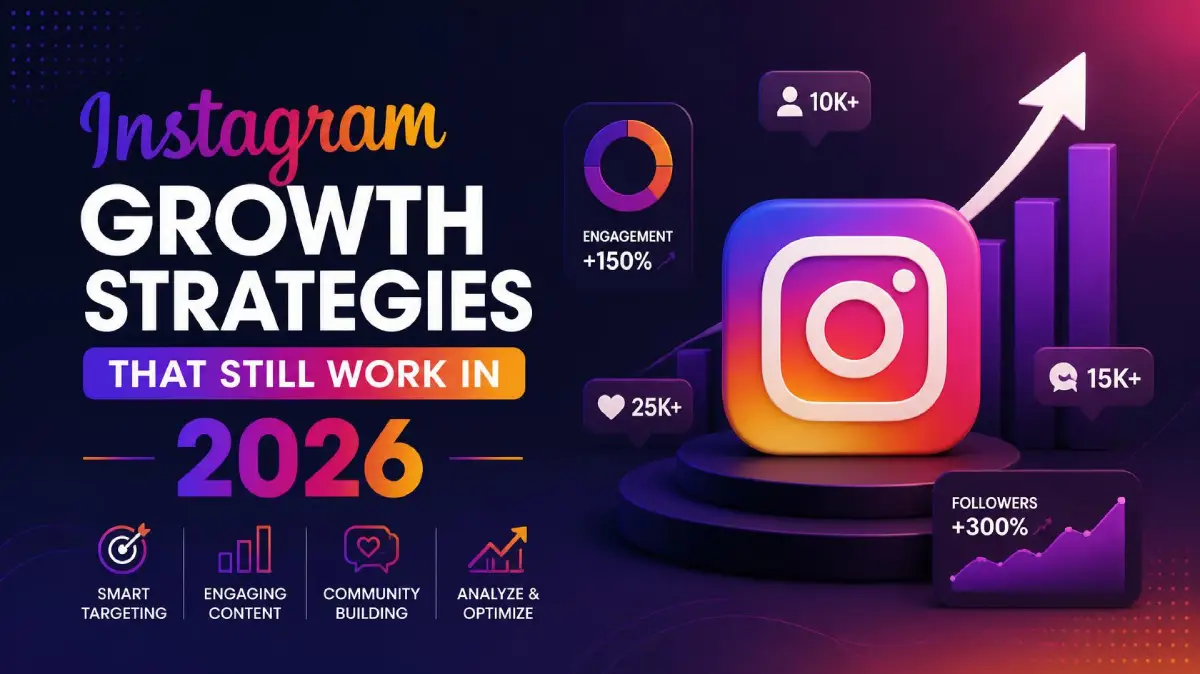
Instagram is now a lot different. It is so hard to get followers just by posting beautiful pictures daily and staying silent. In short, such basic methods still work, but surprisingly well.
But, one major thing different here is that Instagram popularity in 2026 is less about being a trend follower who tries every new Instagram feature as it comes out and rather is about being creative with making content that people actually stop scrolling to understand, save, share and sometimes they might even do search later.
Yeah sure, it makes sense. Still, countless pages upload random reels, slap a 25 hashtag, put a question mark caption with “do you want to know my thoughts?” caption and then they get puzzled about the reason why the reach has gone down? A better idea is to start everything with a simple question: “would someone really want to see this post?” That question could raise the standard of every part of an Instagram strategy if not completely change it.
Search is becoming a bigger part of Instagram
Instagram is not only a social feed anymore. People search for cafes, hairstyles, skincare tips, travel places, clothing ideas, recipes, creators, products and even local services. So content should contain words that clearly explain what it is about.
For example, a fitness page posting a reel about “5-minute home workout for beginners” is easier to understand than a reel titled “Try this today.” The second one may look catchy, but the first one gives Instagram and the audience useful context.
This is one of the more practical Instagram Growth Strategies That Still Work in 2026: use natural search phrases in captions, on-screen text, spoken audio and profile descriptions. Not stuffing keywords everywhere. That usually sounds awkward. A Mumbai bakery, for example, could naturally mention “best eggless birthday cakes in Mumbai” if that genuinely describes the business. There is no need to repeat the phrase ten times.
Reels still matter, but not every reel needs to go viral
There is a slightly funny obsession with viral reels. A reel gets 500,000 views and everyone celebrates. Then the next ten posts get 2,000 views and the account owner thinks something has gone terribly wrong. Virality is not the whole game.
A reel reaching 15,000 people who actually need a service can be more valuable than a random 300,000-view entertainment reel. Short videos still work because they communicate quickly. But useful reels often have better long-term value.
A tax consultant could make a reel explaining “3 mistakes salaried employees make while filing ITR.” A fashion store could show how one kurta can be styled three ways. A dentist could explain why gums bleed during brushing. These are not necessarily glamorous topics. Still, they answer real questions. And useful content tends to get saved.
The first few seconds deserve serious attention
People scroll very fast. There is no need to make the opening dramatic every time, but there must be a reason to continue watching. “Here are three things that can improve your LinkedIn profile” is clear. “Wait till the end!” is weaker because it says almost nothing.
A strong opening can identify a problem, promise an answer, show an interesting result, or create curiosity. For example:
“This is why your Instagram reels get views but no followers.”
That immediately creates a reason to stay. Another practical point: the opening should match the actual content. If the reel promises five tips and gives two vague ones, retention may suffer and trust definitely suffers.
Saves and shares are often more useful than likes
Likes feel good, but they do not always indicate business value. A saved post means someone may want to return to it. A shared post means someone thought another person should see it. That is powerful.
Consider a post called “Instagram content calendar for small businesses.” A business owner may save it on Monday and actually use it later. That type of content has a longer life than a generic motivational quote.
For this reason, creators should regularly ask: Would someone send this to a friend or save it for next week?
If the answer is no, the content may need a stronger practical angle.
Carousels are still quietly doing their job
Everyone talks about reels, but carousels should not be thrown away. A good carousel can explain something properly without forcing everything into a 20-second video. A digital marketing agency might create:
“7 Instagram mistakes killing reach”
Then each slide handles one mistake with a simple explanation and example. The last slide can give a small action plan.
The important thing is not making ten slides just because ten slides are possible. If five slides explain the topic better, use five. Longer does not automatically mean better.
Original content beats recycled noise
Trending audio can help, but copying whatever hundreds of creators are doing can make an account look interchangeable. Original examples are stronger.
A real restaurant can show the kitchen before opening. A clothing brand can explain why a particular fabric works better in Indian summers. A travel creator can mention the actual mistake tourists make at a destination. These details create identity.
There is also a trust advantage. AI can generate polished content very quickly now, so overly perfect posts sometimes feel less believable.
A slightly imperfect but specific explanation can perform better because it feels like someone actually knows the subject.
Captions should explain, not just decorate
Captions have become strangely neglected. “Monday mood” may be fine for a personal post, but it does very little for discoverability. A useful caption can add context to the visual.
Suppose a skincare brand posts a reel about sunscreen. The caption could explain how much sunscreen is generally recommended, when it should be reapplied, and what type of skin concern the product addresses. That gives the audience another reason to read. mIt also gives search systems more information about the topic. Again, natural language is the key.
Local businesses should use location signals properly
A salon in Indore does not need to pretend to be a global beauty authority. Local relevance can be a major advantage. Mention the city naturally. Show the location. Use relevant local keywords. Create posts around questions customers from that area actually ask. For example: “Best haircut for humid Indore weather” is much more specific than: “Haircare tips you need.”
A restaurant could create content around office lunches, weekend family dining, birthday celebrations or popular dishes in its neighbourhood. People often search with intent that is surprisingly local.
Consistency matters, but posting every day is not compulsory
This is where advice gets contradictory. Some creators say daily posting is essential. Others say quality is everything. Reality is somewhere in the middle. A page posting once every three weeks will probably struggle to build momentum. But forcing seven weak posts every week can also waste time and audience attention. Three strong posts can beat seven forgettable ones. A practical schedule might be three reels, one carousel and several stories each week. Another account may perform better with four reels and fewer feed posts. The right frequency depends on audience, content type and production capacity. The key is having enough activity to learn what works.
Stories are useful for building the relationship
Feed content often attracts people. Stories help keep them around. Polls, questions, behind-the-scenes clips, customer feedback, quick opinions and product demonstrations can make a page feel active.
For example, a clothing brand can ask followers to choose between two colours before launching a new design. That does two things: creates interaction and provides market information.
Not every story needs a sticker, though. Constant “Vote now!” can become annoying. Sometimes a simple warehouse clip or team conversation is enough.
Collaborations can bring better followers
Collaboration is still one of the practical Instagram growth methods. But collaboration does not mean randomly messaging a creator with “Collab?” A better match is based on audience overlap.
A nutritionist and a gym can make sense. A wedding photographer and a makeup artist can make sense. A local cafe and a book creator can make sense.The follower count does not need to match.
A creator with 12,000 followers whose audience is highly relevant can be more useful than a creator with 200,000 followers whose audience has no interest in the product. That part gets missed quite often.
Comments need actual conversation
“Nice.” “Great post.” “Interested.” These comments do not create much conversation. Creators can make comments easier by asking specific questions. Instead of “What do you think?”Try: “Which Instagram feature is hardest to understand right now?” That gives people something concrete to answer. And replies matter. If someone leaves a thoughtful comment and receives no response, the opportunity is partly wasted. Community building is boring sometimes. It is also one of the things that keeps an account human.
Hashtags are not dead, just less magical
Hashtags are still useful for categorisation and discovery, but they are not a secret growth button. Using 30 unrelated hashtags does not suddenly make weak content excellent.
A better approach is to use a smaller set of relevant terms connected to the topic, location, niche and audience.
For an Indian home decor page, terms around Indian interiors, small apartments, home organisation and relevant cities may make more sense than generic tags like #love or #instagood. The content itself still has to carry the weight.
Instagram growth needs testing, not guessing
Analytics should be checked, but not obsessively every hour. Look at which posts generate watch time, shares, saves, profile visits, follows and website actions. One reel may bring huge reach but almost no followers.
Another may get fewer views and generate 80 profile visits. That second post deserves attention. Try changing one thing at a time. Different hooks. Different video lengths. Different topics. Different posting times.
If everything changes together, it becomes difficult to understand what caused the result. This is probably one of the least exciting but most reliable Instagram Growth Strategies That Still Work in 2026. Test. Record. Adjust. Repeat.
AI can help, but personality cannot be outsourced
AI tools can speed up brainstorming, captions, editing ideas and content planning. Fine.
But posting generic AI-written captions about “unlocking your potential” will not create much personality. Use tools for speed, not for replacing knowledge.
A real estate agent has actual customer questions. A teacher has actual student mistakes. A chef has actual kitchen experiences. Those details are valuable because they cannot be copied easily. Specific beats are polished.
Paid promotion should support good content
Boosting every weak post is not a growth strategy. If a post already performs well organically, paid promotion can sometimes help reach a larger relevant audience.
For businesses, ads should ideally have a clear purpose: leads, sales, bookings, website visits or local awareness. Follower numbers alone can become a vanity metric.
A page with 8,000 relevant followers and regular enquiries can be healthier than a page with 80,000 inactive followers. That sounds obvious, but numbers still influence decisions too much.
A practical 2026 content routine
A small business does not need a giant content department. One week could look like this:
Monday: educational reel.
Tuesday: customer question in Stories.
Wednesday: carousel answering a common problem.
Friday: product or service demonstration.
Saturday: behind-the-scenes content.
Sunday: simple poll or opinion question.
That is already enough material to learn from. After four weeks, the account can check which topics created saves, shares, profile visits and enquiries.
Then double down on those topics. Not every strategy needs to be reinvented every month. Sometimes the best move is simply doing the thing that worked again, but better.
What actually makes an Instagram account grow?
Usually, it is not one trick. It is a combination of clear positioning, useful content, strong openings, searchable language, regular posting, audience interaction and patience.
And there will still be bad-performing posts. That is normal. Even good creators publish something that gets surprisingly little reach. One weak post does not mean the account is “shadowbanned.”
For businesses publishing through Universal Link media, the bigger opportunity is to think beyond follower growth and create content that answers the questions potential customers are already asking.
That is where Instagram becomes more than a social platform. It becomes a discovery channel. And in 2026, that difference matters.
FAQs
Yes. Instagram remains useful for discovery, community, personal branding, and business leads when content solves real audience problems consistently.
Relevant hashtags can help categorisation and discovery, but they cannot replace useful content, strong hooks, or audience relevance.
A practical starting point is three to five quality feed posts weekly, then adjusting frequency according to analytics, resources, and audience response.
Not always. Reels can expand reach, while carousels often explain topics better and generate saves. A mix usually works better.