


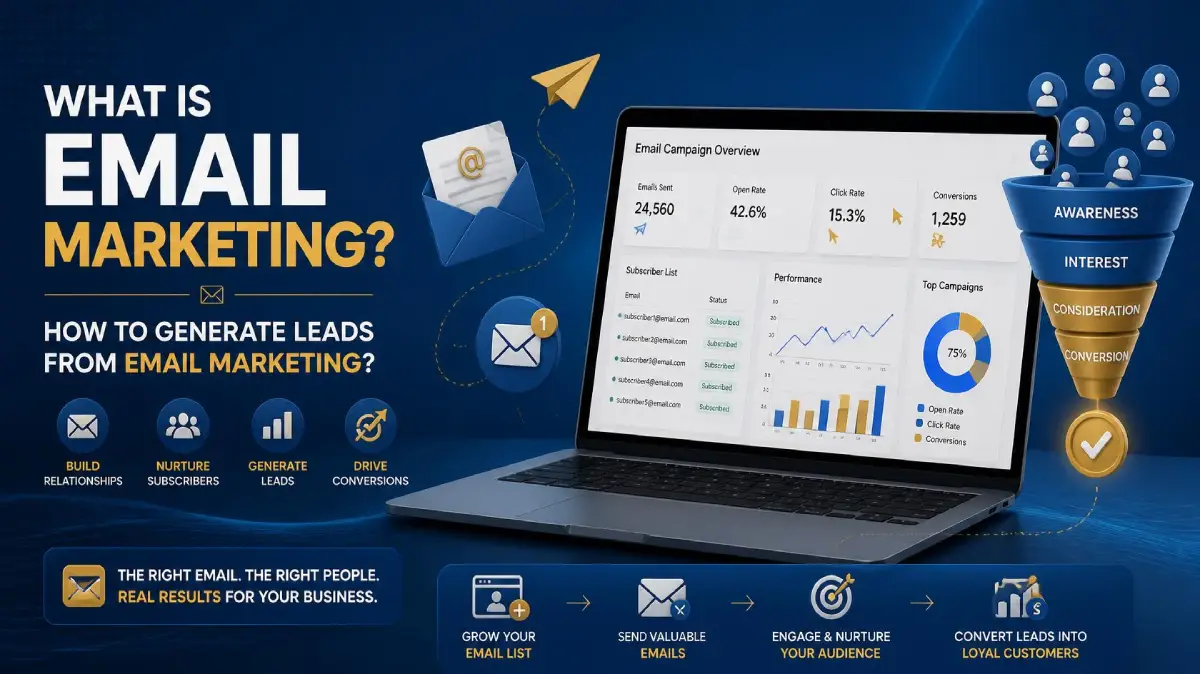
Email marketing sounds old-fashioned sometimes. Social media is a trending topic, reels have gotten millions of views, and businesses are all excited about AI. Yet, a well-structured and thoughtful email still has the power to bring back a customer, remind a buyer about something left in the cart, or even convert a website visitor into a sales lead.
Well, what is email marketing? If an explanation in Indian English is what you want, you can think of email marketing as reaching out to prospective and existing customers via email to do business with the latter. It may also be referred to as the marketing emails that are promotional, the ones that inform you on the latest developments with the products, the newsletters and other kinds of communications that are used for marketing such as offers, product updates, educational content, event invitations, etc. and messages that thank the customers and keep them engaged on top of others that ask them whether they want to know something or not.
The interesting part is that email is not only about selling. A business selling accounting software, for example, may send a small guide about GST compliance first. Another email can explain common accounting mistakes. Later, a product demonstration can be offered. The lead is slowly becoming more familiar with the brand. That is where lead generation comes into the picture. Lets know about email marketing in this blog by Universal Link Media.
What is Email Marketing Really Doing?
A basic email campaign has one job: get the right message in front of the right person at a useful time. Suppose a digital marketing agency gets 500 website visitors in a month. Maybe 30 people fill the contact form. The remaining visitors disappear. Email marketing gives the business another chance to stay connected, provided those visitors have willingly shared their email addresses. A simple newsletter sign-up can become valuable.
For example, a real estate company could offer a free “First-Time Home Buyer Checklist”. A person downloads it and enters the email database. That person may not buy a flat tomorrow. But after receiving useful property insights, locality updates and financing information, the same person may eventually request a site visit. That is lead nurturing, not just email promotion.
How Does Email Marketing Generate Leads?
The process is actually quite practical. First comes an offer. Something useful needs to be exchanged for the visitor’s email address. It could be a checklist, consultation, discount, webinar, report, template, free trial or downloadable guide. Then comes the landing page.
A landing page should not make people think too much. A headline, useful benefit, short explanation and simple form can work better than a page filled with twenty paragraphs. After that, the email sequence starts.
A business might send:
- Welcome email immediately after sign-up.
- Helpful educational email after one or two days.
- Case study or customer example after a few days.
- Product or service explanation later.
- Clear enquiry, demo or purchase invitation when interest is higher.
This is where many businesses make mistakes. Every email says “Buy Now”. That usually becomes irritating.
A person who downloaded a marketing checklist is not automatically ready to purchase a ₹50,000 service. The emails should build relevance first. Sales can come after trust has developed.
Read Our other blog – https://universallinkmedia.com/instagram-growth-strategies-that-still-work-in-2026/
Lead Magnets Can Make a Big Difference
Lead magnets are still useful, especially for B2B companies. A lead magnet is simply a valuable free resource offered in exchange for contact information.
For example, a web development company could offer a “Website Speed Audit Checklist”. A coaching business could provide a career-planning worksheet. A manufacturing company could publish a technical buying guide. The resource should solve a small but real problem.
A vague offer such as “Subscribe for updates” often gets ignored. “Get 10 Website Errors That Reduce Google Visibility” gives a much clearer reason to sign up. Small difference, but it matters.
Email Lists Need Quality, Not Just Numbers
A database containing 50,000 random email addresses may look impressive in a presentation. It may perform terribly. A smaller list of 2,000 relevant subscribers can sometimes produce better leads because those people actually care about the subject.
This is especially important for Indian businesses running campaigns across different cities. A local education institute in Indore does not necessarily need thousands of subscribers from Mumbai, Bengaluru or Dubai. Relevant location, interest and buying intent can matter more than raw volume.
Email lists can be segmented according to industry, location, previous interaction, purchase history, downloaded content or lead stage. That makes communication less random.
Personalisation Does Not Mean Adding a First Name
“Hi Rahul” is not real personalisation by itself. Useful personalisation means changing the message based on what the subscriber actually needs.
Someone who downloaded a beginner SEO guide can receive beginner-level content. Someone who already attended a technical webinar may need a product comparison or implementation guide instead.
For an e-commerce store, abandoned-cart emails can remind shoppers about products left behind. For a SaaS company, users who created an account but never activated a feature can receive a short tutorial. That feels more relevant because the behaviour is driving the message.
Subject Lines Still Matter
The email could contain brilliant information and still fail if nobody opens it. Subject lines should be clear rather than ridiculously clever.
For example:
“5 Website Problems Affecting Lead Generation” is usually more useful than: “Guess What Happened Next…”
The second one sounds like clickbait. Maybe it gets curiosity clicks, maybe it does not. Trust can suffer if the email does not deliver what the subject suggests.
Short subject lines are not compulsory either. The real requirement is clarity, relevance and a reason to open.
The Email Body Should Have One Main Purpose
Too many businesses put everything into one email. New product. Discount. Blog post. Company news. Webinar. Customer story. Social media links. Five buttons. It becomes crowded. A better email usually has one primary action.
For example, a B2B software email might explain one reporting feature and invite readers to book a product demo. Another email can discuss pricing. Another can share a customer story. One message at a time is easier to understand.
Calls to Action Need Some Thought
“Click Here” is technically a call to action, but it says almost nothing. Better examples include: “Book a Free Website Audit”, “Download the Pricing Guide”, “Schedule a Product Demo” or “Get the Property Checklist” etc
The CTA should tell the reader what happens next. For lead generation, the action should also match the buyer stage. Someone discovering a brand may prefer a guide. A warmer prospect may be comfortable booking a call.
Automation Makes Email Marketing More Useful
Manual emailing does not scale nicely. Email automation can trigger messages based on actions such as form submissions, downloads, purchases, webinar registrations or inactivity.
Imagine a student downloading a digital marketing course brochure. An automated sequence can send course details first, then career benefits, then faculty information, and finally an admission-related message. No staff member needs to remember every follow-up manually.
However, automation should not mean sending endless emails. If five messages arrive within two days, the lead may unsubscribe before becoming a customer. Timing needs common sense.
Metrics Tell What Is Actually Working
Open rate is useful, but it should not become the only success metric.
For lead generation, businesses should also monitor:
- Click-through rate.
- Landing page conversions.
- Form submissions.
- Qualified leads.
- Demo bookings.
- Sales generated.
- Unsubscribe rate.
- Revenue from campaigns.
Suppose an email gets a 35% open rate but only two enquiries. Another email gets a 25% open rate and produces fifteen qualified leads. The second campaign may be more valuable despite the lower open rate. Numbers need context.
Email Marketing and SEO Can Work Together
Email marketing does not directly replace SEO. They support each other. A company can publish a useful search-optimised article, promote it through email and bring existing subscribers back to the website. Those visitors may explore other pages, download resources or make enquiries.
For example, a Universal Link Media blog about local SEO can be promoted through a newsletter to business owners. Some readers may share it, contact the company or later search for related services. Content becomes useful in more than one channel.
Common Email Marketing Mistakes
There are some repeated problems. Buying email lists is one. It may produce poor engagement and can create compliance and reputation issues. Sending without permission is another.
Long emails are not automatically bad, but unnecessary writing is. A subscriber reading an email on a mobile phone should quickly understand why the message matters.
Poor mobile formatting is another common issue. Large images, tiny buttons and awkward layouts can quietly damage conversions.
And then there is frequency. Sending once every six months makes a business forgettable. Sending it three times every day makes it annoying. Somewhere between those extremes is usually healthier.
A Practical Email Lead Generation Example
Consider a local interior design company. A visitor reaches the website after searching for “modular kitchen design ideas”. Instead of asking for a sales call immediately, the website offers a free kitchen planning checklist.
The visitor enters an email address. The first email delivers the checklist. The second explains common kitchen layout mistakes. The third shares a real project example. The fourth discusses budget planning. The fifth invites the subscriber for a design consultation.
Not every subscriber will become a customer. That is normal. But the business now has permission to continue a relevant conversation. Some people may enquire immediately. Others may take three months. A few may return after a year.
This is the practical strength of email marketing.
Final Practical Thought
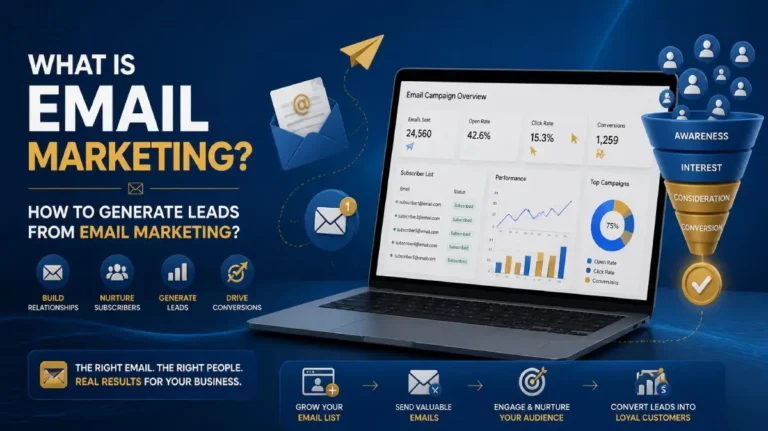
The question “What is Email Marketing? How to generate Leads from Email Marketing?” has a fairly simple answer, but implementation is where the real work happens.
Email marketing uses permission-based communication to attract, educate, nurture and convert potential customers. Lead generation happens when useful offers, landing pages, relevant content, segmentation, automation and clear calls to action work together. The best campaign does not feel like advertising every morning. It feels like a useful message arriving at the right moment.
FAQs
Email marketing is one of the ways businesses use digital marketing to reach out. Through it, they provide valuable, promotional, or educational emails to people on the mailing list. It enables firms to keep in touch with customers by updating them with special offers, sharing newsletters on the new products, or even sending birthday greetings. In essence, it's a strategic activity done at particular periods in the buyer's journey to build rapport so that the company can be considered for the sale of a product or service.
Email marketing helps generate leads by offering something of value (for example guides, discounts webinars or consultations) in return for an email address. Once email subscribers are collected, emails are sent on regular intervals to nurture and guide the leads with relevant content. When there is an uptick in the buyer's interest, the emails trigger actions like inquiries, demo bookings, registrations or purchases.
There are many audiences who have different behaviors that make universal email frequency impossible. Though, several businesses should find it beneficial to start off with one valuable email per week and alter it when it gets the attention of the recipients. What truly matters still is consistency, sending messages that are of interest to your subscribers, and refraining from flooding them with too many that will just cause them to ignore your emails or opt out altogether.
Yes. Email marketing is a good platform for small businesses. It is basically a channel for direct communication and is not reliant on social media algorithms. Targeting a list, offering interesting contents, a couple of simple automations and clearly stating the value can help bring in return customers and also lead the potential customers through longer sales cycles.