


Starting a business in India does not always mean arranging a huge office, hiring ten people, and waiting for customers. That old picture is changing. A person with a laptop, local contacts, one useful skill and some patience can start surprisingly small.
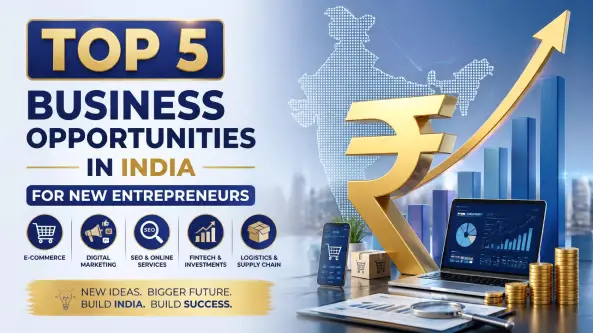
The interesting part is that many opportunities are already around. They may not look glamorous. Some are boring, actually. But boring businesses often make steady money because people need them regularly. For anyone searching for the Top 5 Business opportunities in India for new entrepreneurs, these practical options are worth looking at.
Digital Marketing for Local Businesses
This one keeps growing because local businesses are finally taking online visibility seriously. A salon in Indore, a dentist in Pune, or a small restaurant in Jaipur may have good services but weak online presence.
A new entrepreneur can offer Google Business Profile management, social media posting, basic SEO, review management and simple website improvements. No massive investment is required. A decent laptop and knowledge can be enough initially.
The catch? Clients expect results quickly. Digital marketing is not magic. If a business owner pays ₹10,000 and expects 500 customers next week, problems start. Clear communication matters more than fancy presentations.
For example, a local bakery can receive more calls simply by having updated photos, accurate timings, useful posts and proper location information. Small improvements can become recurring monthly income.
Home-Based Food Business
Food is always discussed when business opportunities in India come up, and yes, it sounds predictable. Still, there is a reason. People eat every day.
The smarter approach is avoiding a generic “everything available” kitchen. A focused menu works better. Think millet breakfast boxes, regional snacks, office lunch subscriptions, homemade sweets, healthy evening snacks or meals for students living away from home.
A home-based food business can begin with ten or twenty regular customers. That sounds tiny, but it teaches the real business lessons: pricing, packaging, delivery, wastage and customer behaviour.
Suppose an entrepreneur sells lunch subscriptions to nearby offices. If the food is consistent and delivery happens on time, customers may continue for months. Taste matters, obviously, but reliability sometimes matters even more.
Licensing, food safety, packaging and local delivery rules should be checked before starting. Cutting corners here is not a clever saving.
Niche E-Commerce Store
E-commerce sounds crowded because it is crowded. Selling another random phone cover online probably will not create a strong business. A niche store is more interesting.
A new entrepreneur can sell regional handicrafts, customised gifts, sustainable household products, pet accessories, Indian ethnic products, hobby supplies or products designed for a very specific customer group.
The useful thing about a niche is that marketing becomes easier to understand. Instead of targeting “everyone in India”, the business knows exactly who may buy.
A personalized wedding gifting store is a simple example. Customers may need return gifts, welcome hampers, bridesmaid boxes or customised name products. Seasonal demand can be strong too.
The business does not necessarily need a warehouse from day one. Some products can be made after receiving orders. This reduces unsold stock, although supplier delays can become a headache.
Skill-Based Freelancing Agency
There is another opportunity hiding in plain sight: selling skills as a service. Graphic design, video editing, website development, bookkeeping, content writing, presentation design, virtual assistance and translation are all services businesses regularly purchase.
One freelancer can start alone and later build a small agency. That transition can happen when client work becomes more than one person can handle.
For instance, a video editor may initially edit five reels a week. Later, another editor can be hired while the founder handles clients and quality checks. Suddenly, the business is no longer only selling personal time.
The important part is choosing a clear offer. “All digital services” sounds vague. “Short-form video editing for real estate agents” sounds much easier to understand.
There will be months with fewer clients. That is normal. A portfolio, referrals and consistent outreach help reduce the ups and downs.
Solar and Energy-Saving Services
India’s growing focus on renewable energy creates opportunities beyond actually manufacturing solar panels. Installation support, maintenance, cleaning, energy audits and related services can also become businesses.
A new entrepreneur does not need to become an engineer overnight. Partnerships with qualified technicians and established suppliers can be explored where regulations allow.
Residential societies, shops, schools and small factories may all be potential customers. Electricity costs make energy-saving conversations easier because the customer already understands the problem.
For example, a small commercial building may want solar installation but not know which system, installer or maintenance plan makes sense. A reliable service provider can coordinate the process.
This business needs more technical understanding than freelancing, so it is not the easiest option for everybody. Still, it can have stronger long-term potential.
Which Opportunity Makes More Sense?
There is no single winner. That is where many business articles become unrealistic.
A person with marketing skills may do better with local digital services. Someone who understands cooking and has a strong neighbourhood network may prefer food. A technical person could explore solar services. The budget also changes the answer.
With limited money, service businesses are usually easier because inventory is low. With access to suppliers and working capital, e-commerce can become more practical. Food businesses can start small but may become operationally demanding.
Another practical point: the business should solve a problem people already pay to solve. Passion is useful, but customers pay for value.
Small City Businesses Can Work Too
Big cities are not the only place where opportunities exist. Tier-2 and Tier-3 Indian cities can offer lower operating costs and less intense competition in certain niches.
A local entrepreneur may understand customer behaviour better than a large company sitting in another city. That local knowledge is valuable.
For example, a regional-language digital marketing service may work particularly well with small shops that struggle with English-heavy agencies. Similarly, local food subscriptions can succeed because the entrepreneur understands nearby tastes and delivery routes.
The key is not copying a metro-city startup blindly. The local market should decide the model.
Start Small, But Track Numbers
A common mistake is spending money before proving demand. A fancy logo, expensive furniture and complicated website cannot replace customers.
Before investing heavily, test the offer. Speak to potential customers. Take a few paid orders. Measure enquiries, conversion, repeat purchases, delivery costs and actual profit. Revenue can look impressive while profit quietly disappears.
A simple example: selling a product for ₹1,000 does not mean ₹1,000 income. Packaging, shipping, advertising, returns, payment charges and taxes may reduce the actual margin considerably. That basic calculation saves many new entrepreneurs from unpleasant surprises.
A Practical Starting Point
For someone still confused, choosing one business based on existing skill is often easier than chasing the “hottest” trend.
Start with one customer segment. Create one clear service or product. Get the first few paying customers. Listen carefully. Improve the offer. Then increase prices or expand.
The Top 5 Business opportunities in India for new entrepreneurs are not necessarily businesses that become famous online. A small service company earning consistent monthly profit can be more valuable than a flashy startup with huge expenses.
Universal Link Media can publish practical business content like this because new entrepreneurs generally need straightforward guidance, not complicated startup language. The real opportunity is often sitting closer than expected.